Written by PX1 Research Team
PX1 chemists and research educators with hands-on experience in US-based peptide manufacturing, HPLC / mass-spectrometry lot testing, and endotoxin QC. All content is citation-backed and peer-reviewed for accuracy.
The Complete Guide to NAD+ Research in 2026
Research Guide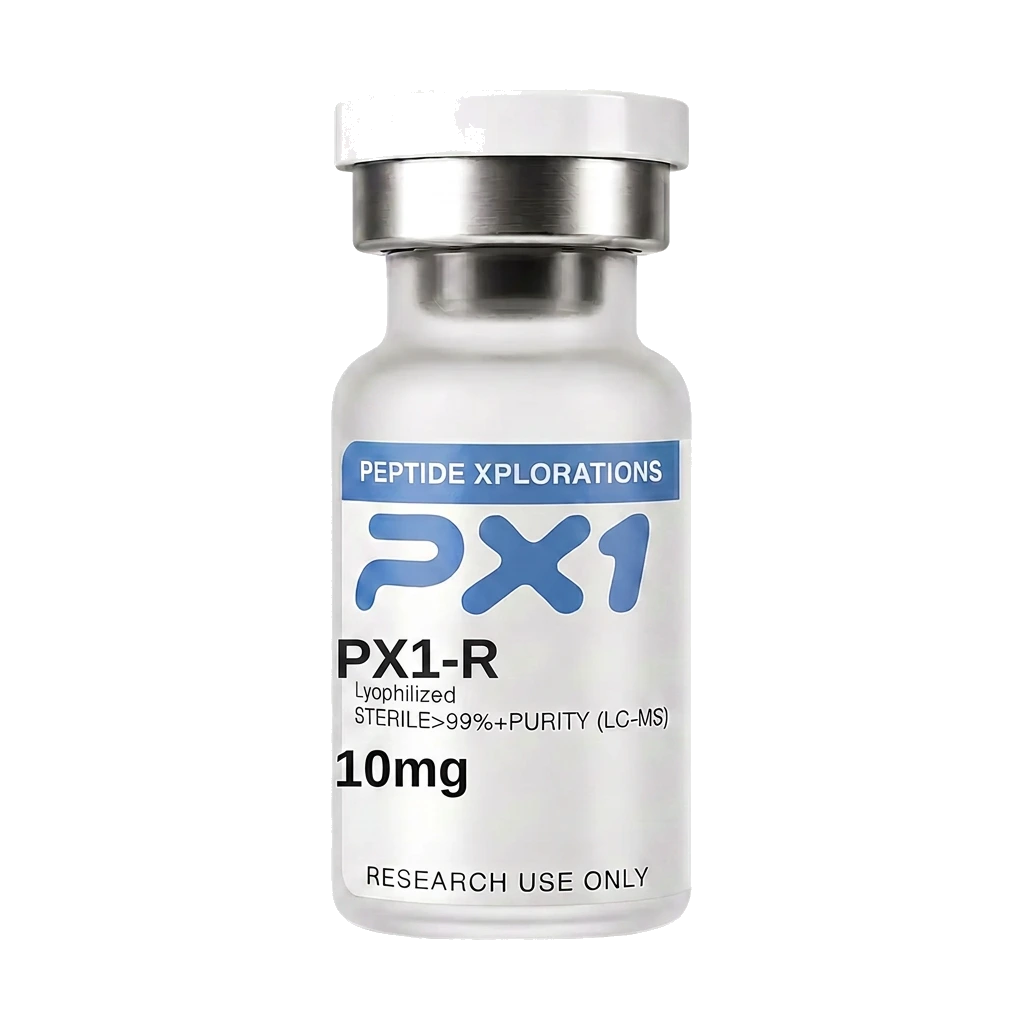
Reviewed By
PX1 QC — Analytical Chemistry Team
Every article is reviewed by PX1's in-house analytical team for accuracy on mechanism, dosing ranges reported in the literature, and lab-handling guidance. We do not publish clinical or medical advice.
Quick answer
The Complete Guide to NAD+ Research in 2026: PX1 research briefing covering mechanism, published data, dosing ranges reported in the literature, laboratory handling, and lot-specific COA verification.
Key takeaways
- NAD⁺ — direct substrate for sirtuins (SIRT1-7), PARPs, and CD38. Increasing cellular NAD⁺ pools boosts sirtuin-mediated deacetylation of longevity-relevant transcription factors and enhances DNA-damage repair capacity.
- MOTS-c — activates AMPK, upregulates GLUT4 translocation, improves insulin-stimulated glucose uptake, and increases oxidative phosphorylation efficiency in preclinical muscle and adipose models.
- SS-31 — cardiolipin binding preserves ETC complex I/III/IV supercomplex assembly and reduces electron leakage that produces mitochondrial ROS.
- Epithalon — proposed telomerase-activator; published Russian data report Peptide-induced increase in telomere length in senescent cell culture.
What NAD+ is
NAD+ belongs to the mitochondrial-longevity family — compounds that target either NAD⁺ metabolism, mitochondrial-derived peptide (MDP) signaling, or inner-mitochondrial-membrane function directly. The class shares a common rationale: cellular aging biology is inseparable from mitochondrial function, and interventions that restore mitochondrial output have downstream effects across nearly every age-associated pathway.
NAD⁺ (nicotinamide adenine dinucleotide) is a coenzyme central to cellular energy metabolism, DNA repair (via PARP enzymes), and sirtuin activity. Cellular NAD⁺ declines with age; replenishment via IV or subcutaneous NAD⁺ or via precursors (NR, NMN) is a major axis of longevity research.
Mechanism of action
- NAD⁺ — direct substrate for sirtuins (SIRT1-7), PARPs, and CD38. Increasing cellular NAD⁺ pools boosts sirtuin-mediated deacetylation of longevity-relevant transcription factors and enhances DNA-damage repair capacity.
- MOTS-c — activates AMPK, upregulates GLUT4 translocation, improves insulin-stimulated glucose uptake, and increases oxidative phosphorylation efficiency in preclinical muscle and adipose models.
- SS-31 — cardiolipin binding preserves ETC complex I/III/IV supercomplex assembly and reduces electron leakage that produces mitochondrial ROS.
- Epithalon — proposed telomerase-activator; published Russian data report Peptide-induced increase in telomere length in senescent cell culture.
Published research findings
- NAD⁺ has a large clinical literature spanning metabolic disease, neurodegeneration, and post-COVID fatigue (Rejuvenate trial, Metrodora, etc.).
- MOTS-c has published preclinical data showing prevention of diet-induced obesity, improved insulin sensitivity, and enhanced exercise capacity (Reynolds et al., Nature Communications).
- SS-31 has been in multiple Phase 2/3 human trials for primary mitochondrial myopathy (Bendavia program, later reformulated as elamipretide).
- Epithalon has 30+ years of published Russian gerontology data (Prof. Anisimov group).
Routes reported in research
- Subcutaneous injection for MOTS-c, SS-31, and Epithalon.
- Intravenous or subcutaneous for NAD⁺; nasal-spray formulations exist in research use.
Dosing ranges reported in the literature
- NAD⁺: subcutaneous 100–500 mg per session, 3–5 sessions per week; IV protocols 250–1000 mg per session.
- MOTS-c: 5–10 mg subcutaneous, 2–3 times per week in reported research protocols.
- SS-31: 20–40 mg subcutaneous daily in the Bendavia clinical program.
- Epithalon: 5–10 mg subcutaneous daily, typically for 10–20 day cycles.
Stacking discussed in the literature
- NAD⁺ + MOTS-c — the canonical mitochondrial-support pairing.
- SS-31 + NAD⁺ + Urolithin A — a broader mitochondrial-quality protocol.
- Epithalon + GHK-Cu — combined longevity-signaling stack.
Standard laboratory handling
Every research vial from PX1 is a lyophilized (freeze-dried) powder sealed under vacuum in a Type-I borosilicate vial with a butyl-rubber stopper and aluminum crimp seal. Correct handling preserves potency and prevents peptide-bond hydrolysis that degrades the active molecule.
- Storage before reconstitution: 2–8 °C refrigerator is ideal; freezer (−20 °C) for storage beyond six months. Short excursions to room temperature during shipping do not compromise integrity — the compound is stable in its solid state.
- Reconstitution solvent: bacteriostatic water for injection (0.9% benzyl alcohol) is standard for research protocols that require multiple sampling events from the same vial. Sterile water is acceptable for single-use protocols.
- Reconstitution technique: inject the diluent slowly against the vial wall — never directly onto the lyophilized cake. Swirl gently; do not shake. Shaking introduces air, denatures peptide secondary structure, and can create insoluble aggregates.
- Post-reconstitution storage: 2–8 °C refrigerated, typically stable 21–30 days depending on the peptide. Freezing a reconstituted solution repeatedly is not recommended — freeze/thaw cycles are the single biggest driver of loss-of-potency in the research literature.
- Concentration math: volume of diluent (mL) = peptide mass (mg) ÷ desired concentration (mg/mL). Example: 10 mg vial + 2 mL bacteriostatic water = 5 mg/mL.
Purity, identity and COA verification
The single most important due-diligence step when sourcing NAD+ for research is reviewing the lot-specific Certificate of Analysis (COA). A credible COA contains:
- HPLC purity value with chromatogram — target ≥ 98% for injectable-grade research peptides; ≥ 99% for the newest generation of GLP/incretin compounds. A single well-defined main peak with baseline separation from impurities is what you are looking for.
- Identity confirmation by mass spectrometry — LC-MS or MALDI-TOF confirming the observed molecular weight matches the theoretical mass to within instrument tolerance.
- Endotoxin (LAL / kinetic-chromogenic) result — expressed in EU/mg; USP guidance for parenteral products is well below 5 EU/kg body-weight equivalent, and reputable suppliers report < 10 EU/mg on the COA.
- Sterility result — USP <71> membrane filtration or direct inoculation, both bacterial and fungal.
- Karl Fischer moisture — target < 5% residual water for a properly lyophilized cake.
- Residual-solvent screen — DMF, TFA, DCM, acetonitrile below ICH Q3C thresholds.
PX1 publishes lot-specific COAs at /purity-reports. If you have received a shipment and want to verify the exact lot documentation for NAD+, cross-reference the lot number on the vial label to the COA PDF.
Why researchers choose PX1 for NAD+
- 100% U.S. manufacturing, lyophilization, and fill/finish. No repackaged imports. Every step from raw amino acid to sealed vial happens under one U.S. GMP-compliant roof.
- Third-party ISO-17025 testing on every lot. Purity, identity, endotoxin, sterility, moisture, and residual-solvent testing performed by an independent analytical laboratory whose data appears on the shipped COA.
- Chain-of-custody documentation from raw material through final QC — the same documentation package a clinical CDMO would provide.
- Same-day shipping on in-stock catalog items ordered before 3 p.m. ET, with insulated packaging and cold-pack where appropriate.
Common researcher questions
Q: How do I know the vial contents match the label? Compare the lot number on the vial to the lot number on the COA. The COA lists HPLC purity, identity by mass-spec, and endotoxin. If any of the three is missing or the lot doesn't match, don't proceed.
Q: Can I use bacteriostatic water past its printed expiration? Bacteriostatic water carries a manufacturer-assigned expiration for the sealed vial. Once punctured, USP guidance limits multi-dose vials to 28 days at 2–8 °C. Beyond 28 days, discard.
Q: Is refrigeration required during shipping? For most lyophilized peptides, no — the solid form is stable at ambient temperature for weeks. Some compounds (IGF-1 LR3, certain GH-releasing peptides) benefit from cold-chain shipping. PX1 uses insulated packaging for temperature-sensitive lines.
Q: What if the reconstituted solution is cloudy? Cloudiness indicates aggregation or precipitation and the solution should not be used. Common causes: over-vigorous shaking, incompatible diluent, or a vial that has passed its stability window.
Research use disclaimer
NAD+ is supplied to licensed research professionals for in vitro and in vivo laboratory research only. Products are not intended for human consumption, veterinary use, diagnostic use, therapeutic use, or as a food additive or cosmetic. Nothing on this page constitutes medical advice. Consult the primary literature — clinical-trial registrations, peer-reviewed publications — before designing any protocol. Compounds discussed here are investigational; several have not received FDA approval for any indication.
Additional PX1 references
- Complete research library
- Lot-specific purity reports
- Product catalog
- Manufacturing & QC standards