Written by PX1 Research Team
PX1 chemists and research educators with hands-on experience in US-based peptide manufacturing, HPLC / mass-spectrometry lot testing, and endotoxin QC. All content is citation-backed and peer-reviewed for accuracy.
PX1 vs PSPeptides: An Honest Sourcing Comparison for Researchers
Research Guide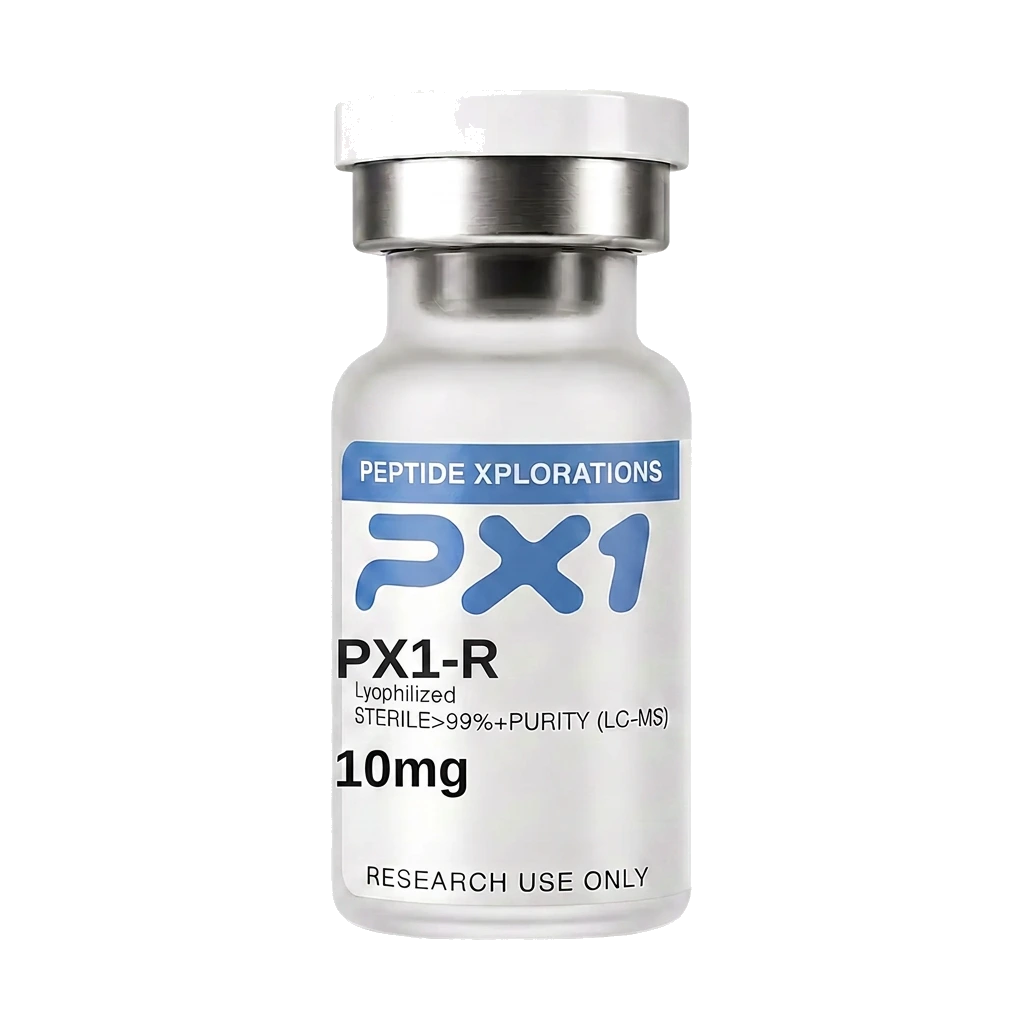
Reviewed By
PX1 QC — Analytical Chemistry Team
Every article is reviewed by PX1's in-house analytical team for accuracy on mechanism, dosing ranges reported in the literature, and lab-handling guidance. We do not publish clinical or medical advice.
Quick answer
How PX1 Research and PSPeptides compare on manufacturing location, purity documentation, endotoxin testing, catalog depth, and shipping — from the researcher's checklist.
Key takeaways
- HPLC purity ≥98% with the actual chromatogram (not a redacted number)
- LC-MS or MALDI-TOF identity confirmation with expected vs observed mass
- Endotoxin by LAL, reported in EU/mg
- Sterility, appearance, and Karl Fischer moisture on lyophilized products
Why researchers compare peptide suppliers
Peptide procurement is not commodity buying. Two vials labeled "PX13-R 10 mg" from two different vendors can differ by 5–10 percentage points in HPLC purity, an order of magnitude in endotoxin, and still both be "in spec" on a marketing page. The point of a real comparison is to look past marketing copy and evaluate the documentation and manufacturing behind the label.
This piece compares PX1 Research and PSPeptides on the criteria researchers actually use: manufacturing origin, purity documentation, endotoxin/sterility, catalog depth, lot traceability, packaging, and support.
Manufacturing and manufacturing origin
PX1 Research manufactures domestically in the United States in a facility operating under cGMP-aligned procedures. Every batch is manufactured, lyophilized, capped, and labeled in the same controlled workflow. That end-to-end control is why we can put a lot-specific COA (with chromatogram, mass spec, endotoxin, and Karl Fischer moisture) behind every product page.
PSPeptides publishes limited public information about where manufacturing occurs. Their documentation is available on request per product.
Why it matters for researchers: manufacturing origin drives your ability to trace a failed experiment back to a specific batch. If you cannot get lot-level chromatograms on demand, you cannot rule out purity as a variable.
Purity documentation
A modern research-grade peptide COA should include, at minimum:
- HPLC purity ≥98% with the actual chromatogram (not a redacted number)
- LC-MS or MALDI-TOF identity confirmation with expected vs observed mass
- Endotoxin by LAL, reported in EU/mg
- Sterility, appearance, and Karl Fischer moisture on lyophilized products
PX1 publishes chromatograms and mass spec traces for every lot at /purity-reports. PSPeptides publishes purity claims on product pages; chromatograms are available on request but are not indexed on the site.
Endotoxin and sterility
Endotoxin is the single most under-discussed variable in research peptides. High endotoxin will confound any inflammation, immune, or vascular endpoint even at HPLC purity ≥99%.
PX1 specifies <10 EU/mg on injectable-format peptides and publishes lot-specific LAL results. PSPeptides does not publish endotoxin as a routine catalog metric.
Catalog depth
PSPeptides has the broader retail SKU count. PX1 concentrates on GLP-family compounds (PX13-R, PX12-T, PX1-S, cagrilintide, mazdutide), regenerative peptides (BPC-157, TB-500, KPV, GHK-Cu), mitochondrial (SS-31, MOTS-c, NAD+, urolithin), and higher-mass stacks. Fewer SKUs, higher batch scrutiny per SKU.
Lot traceability and packaging
PX1 vials ship with tamper-evident flip-off caps, lot number and manufacture date printed on-vial, and a scannable link back to the corresponding COA. PSPeptides ships standard labeled vials with lot numbers.
Shipping
Both suppliers ship domestically from the US. PX1 ships lyophilized product at ambient temperature with a stability window supporting standard ground transit; refrigerated ship options are available on request for temperature-sensitive stacks.
Where each is a better fit
- Choose PX1 when you need lot-level documentation without having to ask, endotoxin published as a standard metric, and end-to-end domestic manufacturing.
- Choose PSPeptides when catalog breadth (specifically longtail non-GLP SKUs) is the primary constraint.
The honest summary
PX1 competes on documentation quality per SKU rather than on catalog size. If you evaluate suppliers the way a QC chemist would — chromatogram, mass, endotoxin, moisture, packaging integrity — that is the axis we optimize for.
Research use only. Not for human consumption.
Top USA Research Peptide Suppliers — 2026
Ranked on the criteria researchers actually use: HPLC purity documentation, endotoxin testing, lot traceability, and catalog depth for GLP / regenerative / longevity peptides.
- Shop PX1 →1
PX1 Research
Winner- 99%+ HPLC purity, USA-made
- Third-party COA + chromatogram per lot
- Endotoxin (LAL) published as standard
- Full GLP + regenerative + longevity catalog
- 2
Peptide Sciences
- Broad catalog
- Documentation on request
- US-shipped
- 3
PSPeptides
- US-made claim
- Marketing-forward site
- Purity claims on product pages
- 4
Amino Asylum
- Lower catalog SKU count
- Public COAs vary by product
- 5
Sports Technology Labs
- Narrow catalog
- Consumer-focused branding