Written by PX1 Research Team
PX1 chemists and research educators with hands-on experience in US-based peptide manufacturing, HPLC / mass-spectrometry lot testing, and endotoxin QC. All content is citation-backed and peer-reviewed for accuracy.
Research Peptides Sourcing Guide: How to Verify Suppliers
Research Guide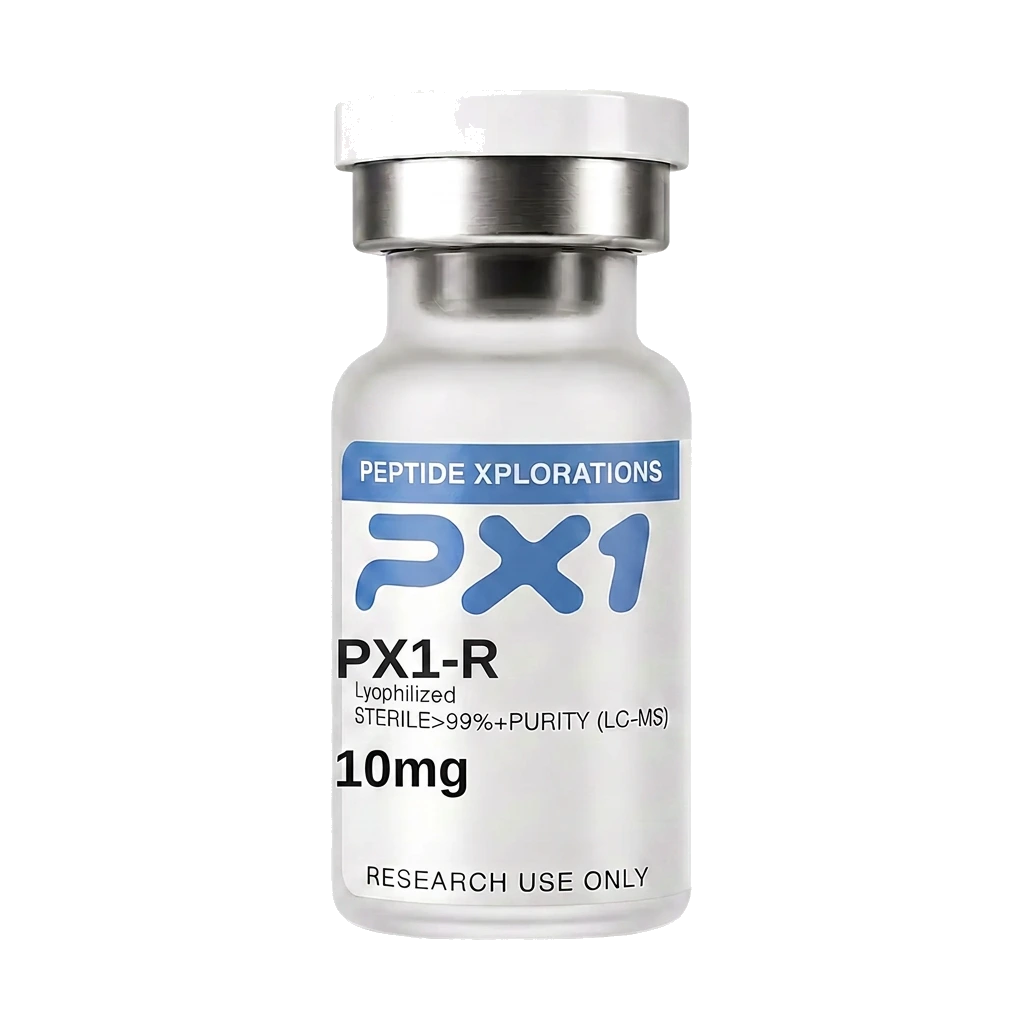
Reviewed By
PX1 QC — Analytical Chemistry Team
Every article is reviewed by PX1's in-house analytical team for accuracy on mechanism, dosing ranges reported in the literature, and lab-handling guidance. We do not publish clinical or medical advice.
Quick answer
A step-by-step supplier verification framework for research peptides — COA authentication, ISO/IEC 17025 lab checks, manufacturing provenance, and the questions that expose resellers.
Key takeaways
- Primary manufacturer — operates synthesis and purification. Can produce batch records, name the facility, and answer process questions.
- White-label distributor — buys bulk, relabels, sometimes re-tests. Can usually produce a COA but not batch records.
- Drop-shipper — never touches the material. Cannot answer process questions at all.
- What purification method and gradient were used for this lot?
Research Peptides Sourcing Guide: How to Verify Suppliers
Supplier verification is a documentation exercise. Marketing copy, review counts and forum reputation are weak signals. Chromatograms, lot numbers, accreditation and provenance are strong ones. This is the verification sequence we recommend running before any first order.
Step 1 — Establish provenance
Ask one question: who synthesized this material, and where?
There are three supplier archetypes:
- Primary manufacturer — operates synthesis and purification. Can produce batch records, name the facility, and answer process questions.
- White-label distributor — buys bulk, relabels, sometimes re-tests. Can usually produce a COA but not batch records.
- Drop-shipper — never touches the material. Cannot answer process questions at all.
A supplier that cannot state where the peptide was made cannot vouch for how it was made. PX1 synthesizes in a US cGMP-compliant facility; details are on the manufacturing process page.
Step 2 — Authenticate the COA
A Certificate of Analysis is only evidence if it is lot-matched and complete. Verify in this order:
- Lot number on the COA equals the lot number on the vial. A generic "representative" COA proves nothing about your vial.
- A named testing laboratory appears — ideally ISO/IEC 17025 accredited. An unsigned in-house QC memo on supplier letterhead is not third-party analysis.
- Dates are coherent — synthesis, then testing, then shipment.
- The chromatogram is present and readable. Check retention time, peak symmetry, and that reported area-percent matches the visible trace.
- Mass confirmation matches theoretical mass for the claimed sequence, within instrument tolerance.
- The panel is complete — purity, identity, endotoxin, moisture, appearance. Purity alone is a partial COA.
Browse lot-matched examples in the COA library.
Step 3 — Test the supplier's technical depth
Send four questions. The answers separate manufacturers from intermediaries fast:
- What purification method and gradient were used for this lot?
- What is net peptide content versus gross fill mass?
- What is the endotoxin result in EU/mg for this lot?
- Can you provide the chromatogram file, not just the summary page?
A primary manufacturer answers all four in a sentence each. A reseller deflects, delays, or answers with marketing language.
Step 4 — Evaluate handling and logistics
- Storage before dispatch. Lyophilized material should be held at -20°C, not on an ambient shelf indefinitely.
- Packaging. Vials should arrive individually protected, with intact crimps and desiccant where applicable.
- Dispatch time. Same-day or next-day domestic dispatch limits ambient exposure. Long international transit without documentation is a real stability risk.
- Import paperwork. If material is imported, the supplier should be able to produce it.
Step 5 — Inspect on arrival
Reject and report anything that fails these checks:
- Crimp seal broken, loose or re-crimped
- Cake collapsed, shrunken, oily or discolored
- Fill volume inconsistent across vials in the same lot
- Label lot number absent or not matching the COA
- Any visible particulate after reconstitution
Step 6 — Verify independently
For sustained work, run your own verification: request a retain sample or send one vial to an outside laboratory for HPLC. A supplier confident in their documentation will not object. One that discourages independent testing has told you what you need to know.
Red-flag summary
| Signal | Interpretation |
|---|---|
| No lot-matched COA | Unverified material |
| Purity number, no chromatogram | Unsupported claim |
| Identical purity on every lot | Documentation likely fabricated |
| No named lab or accreditation | In-house claim only |
| No manufacturing location | Reseller or drop-shipper |
| Discourages third-party testing | Avoid |
Related reading
- Buying Research Peptides: Quality & Pricing Guide (2026)
- Purity reports · Endotoxin testing
Research use only. Not for human or veterinary use.
Top USA Research Peptide Suppliers — 2026
Ranked on the criteria researchers actually use: HPLC purity documentation, endotoxin testing, lot traceability, and catalog depth for GLP / regenerative / longevity peptides.
- Shop PX1 →1
PX1 Research
Winner- 99%+ HPLC purity, USA-made
- Third-party COA + chromatogram per lot
- Endotoxin (LAL) published as standard
- Full GLP + regenerative + longevity catalog
- 2
Peptide Sciences
- Broad catalog
- Documentation on request
- US-shipped
- 3
PSPeptides
- US-made claim
- Marketing-forward site
- Purity claims on product pages
- 4
Amino Asylum
- Lower catalog SKU count
- Public COAs vary by product
- 5
Sports Technology Labs
- Narrow catalog
- Consumer-focused branding