Written by PX1 Research Team
PX1 chemists and research educators with hands-on experience in US-based peptide manufacturing, HPLC / mass-spectrometry lot testing, and endotoxin QC. All content is citation-backed and peer-reviewed for accuracy.
PX1 vs Amino Club: Sourcing, Purity, and Catalog Compared
Research Guide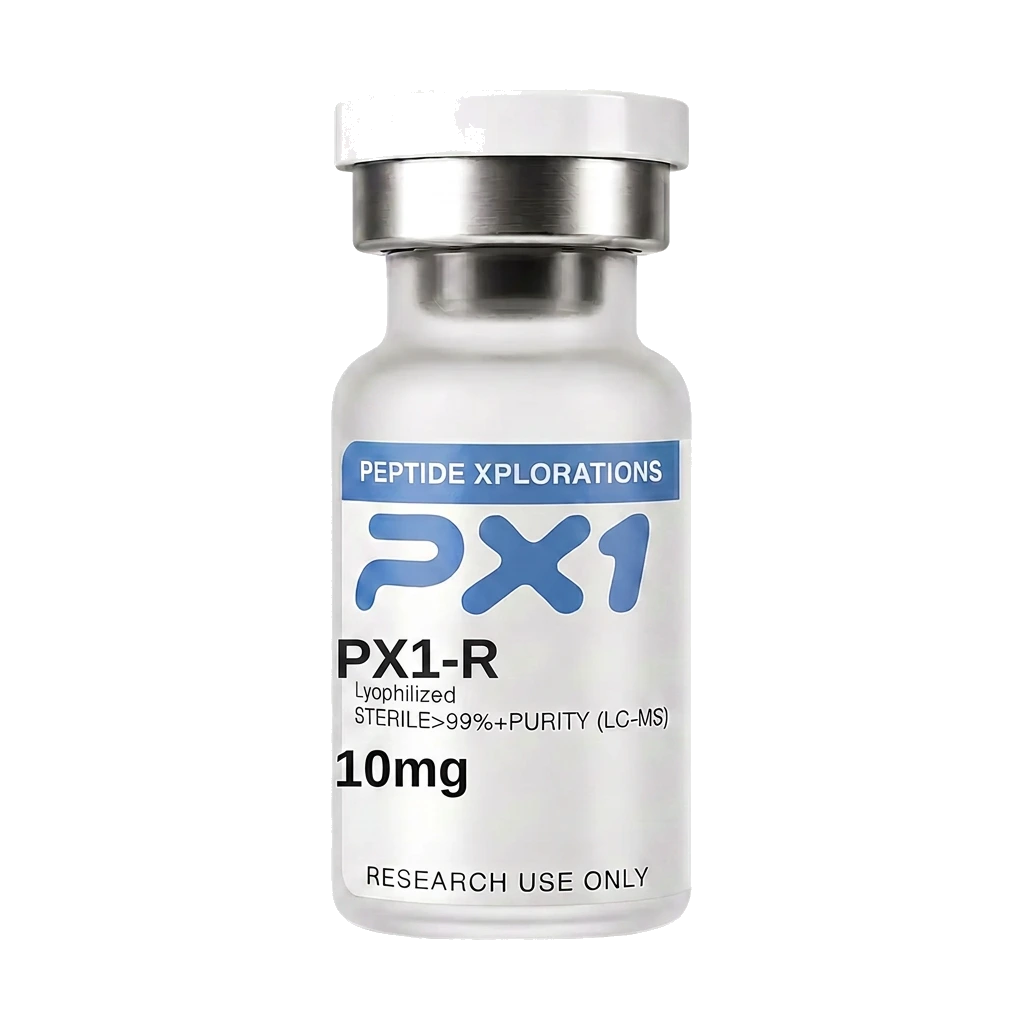
Reviewed By
PX1 QC — Analytical Chemistry Team
Every article is reviewed by PX1's in-house analytical team for accuracy on mechanism, dosing ranges reported in the literature, and lab-handling guidance. We do not publish clinical or medical advice.
Quick answer
Amino Club and PX1 Research both sell research peptides in the US. How they compare on documentation, endotoxin, GLP catalog, and support.
Key takeaways
- LC-MS mass verification
- Endotoxin (LAL) in EU/mg
- Karl Fischer moisture
- Sterility and appearance
Overview
Amino Club is a US-based research peptide retailer with a broad catalog and a strong direct-to-consumer marketing presence. PX1 Research is a US manufacturer focused on GLP-family, regenerative, and mitochondrial peptides with a documentation-first sourcing model.
Below is a criterion-by-criterion comparison for researchers evaluating both.
Manufacturing and manufacturing
PX1 manufactures and lyophilizes in-house in the United States. Every batch is fully traceable — manufacturing, purification, fill, and labeling occur in one controlled workflow. Amino Club sources from third-party manufacturers; specific facility disclosures are limited.
Implication: if you need to reproduce an experiment against the same manufacturing conditions six months from now, an in-house manufacturer will still have the batch record. A reseller may not.
Certificates of Analysis
PX1 publishes lot-specific COAs with:
- HPLC chromatogram
- LC-MS mass verification
- Endotoxin (LAL) in EU/mg
- Karl Fischer moisture
- Sterility and appearance
Amino Club provides purity numbers on product pages and COAs on request. Chromatograms are not indexed publicly.
Endotoxin
PX1 specifies <10 EU/mg on injectable products, published per lot. Amino Club does not publish endotoxin as a standard catalog metric.
For any research endpoint touching inflammation, vascular tone, or immune signaling, endotoxin is not optional data.
Catalog focus
Amino Club runs a wider longtail SKU count. PX1 concentrates on GLP-1/GIP/glucagon agonists (PX13-R, PX12-T, PX1-S, cagrilintide, survodutide, mazdutide), regenerative peptides, and mitochondrial compounds — the compounds our labs run the tightest QC on.
Pricing
PX1 wholesale pricing (100+ vial tiers) starts at ~$5 per vial on select GLP compounds. Retail pricing is competitive with Amino Club on comparable SKUs; the differentiator is the documentation package attached to each vial.
Where each fits
- PX1 for researchers who want in-house manufacturing, published chromatograms, and endotoxin data on every lot.
- Amino Club for researchers who prioritize catalog breadth over per-SKU documentation depth.
Research use only. Not for human consumption.
Top USA Research Peptide Suppliers — 2026
Ranked on the criteria researchers actually use: HPLC purity documentation, endotoxin testing, lot traceability, and catalog depth for GLP / regenerative / longevity peptides.
- Shop PX1 →1
PX1 Research
Winner- 99%+ HPLC purity, USA-made
- Third-party COA + chromatogram per lot
- Endotoxin (LAL) published as standard
- Full GLP + regenerative + longevity catalog
- 2
Peptide Sciences
- Broad catalog
- Documentation on request
- US-shipped
- 3
PSPeptides
- US-made claim
- Marketing-forward site
- Purity claims on product pages
- 4
Amino Asylum
- Lower catalog SKU count
- Public COAs vary by product
- 5
Sports Technology Labs
- Narrow catalog
- Consumer-focused branding