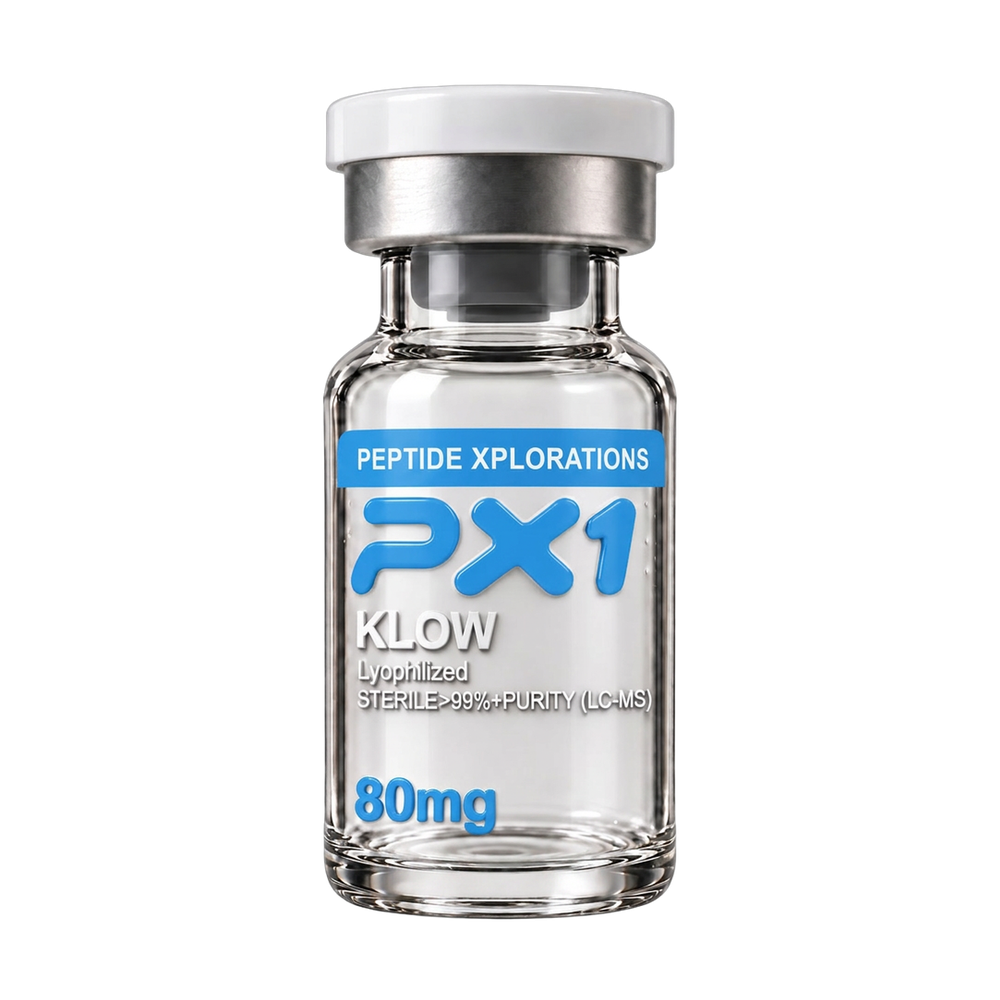
KLOW Research Stack: Comprehensive Healing & Regenerative Research Protocol – PX1 Research
Advanced Peptide Synergy for Cutting-Edge Tissue Repair & Anti-Inflammatory Research
The KLOW Research Stack includes:
- TB500 5mg
- BPC157 5mg
- GHK-CU 50mg
- KPV 10mg
KLOW Research Stack – PX1 Research invites you to explore the vanguard of regenerative science research with the KLOW Research Stack. This expertly assembled collection integrates four of the most influential and clinically analyzed peptides currently used in science: BPC-157, TB500, GHK-Cu, and KPV. Intended specifically for in vitro and preclinical laboratory investigation, the KLOW Stack offers a thorough framework for investigating tissue restoration, inflammatory modulation, systemic recovery, and dermal regeneration.
Disclaimer: The KLOW Research Stack and its individual constituents are provided exclusively for research applications within a regulated laboratory setting. These substances are NOT for human or veterinary use, nor for the diagnosis or treatment of any illness. By purchasing from PX1 Research, you verify your status as a qualified researcher following all legal and institutional protocols.
The KLOW Research Stack is developed for investigators prioritizing:
- Whole-Body Tissue Repair: Focusing on ligaments, tendons, musculature, neurons, and the digestive tract.
- Potent Anti-Inflammatory & Anti-Fibrotic Pathways: Assessing the localized and systemic mitigation of scar tissue and inflammation.
- Dermal Restoration & Physical Recovery: Investigating faster wound closure, antioxidant defense, and improved collagen production.
- Immune Modulation & Gut-Brain Axis: Studying the complex relationship between systemic health, inflammation, and intestinal barrier integrity.
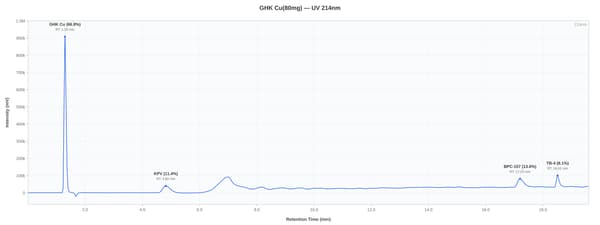
Every vial is produced in an ISO-certified environment and undergoes strict third-party High-Performance Liquid Chromatography (HPLC) validation to confirm a purity level of ≥98%, ensuring superior reliability and quality for scientific trials.
Each peptide carries HPLC verification (≥98% purity) with dosage references derived from existing preclinical literature. An ideal choice for developing comprehensive healing protocols.
PX1 Research – Premium Research Peptides for Scientific Discovery
1. BPC-157 (Body Protecting Compound-157) – The Ultimate Healing Peptide
KLOW Research Stack Mechanism of Action:
BPC-157 is a stable gastric pentadecapeptide recognized for its significant systemic restorative properties. It facilitates repair via several biological pathways:
- Angiogenesis: Investigated for its ability to generate new vasculature, increasing blood supply to damaged regions.
- Growth Factor Upregulation: Boosts the expression of essential factors such as FGF (Fibroblast Growth Factor) and VEGF (Vascular Endothelial Growth Factor).
- Structural Remodeling: Facilitates the deposition of collagen and the movement of fibroblasts, creating organized and robust tissue repair.
- Anti-Inflammatory Action: Adjusts the immune response by lowering pro-inflammatory cytokine levels.
- Oxidative Stress Defense: Protects cellular structures from free radical damage.
KLOW Research Stack Applications & Key Studies:
- Ligament and Tendon Recovery: A landmark study found that BPC-157 markedly improved the rehabilitation of severed Achilles tendons in rat models, resulting in superior histological structure and mechanical strength.
- Study: BPC-157 enhances the healing of transected rat Achilles tendon
- Research Dosage: 10 µg/kg delivered via intraperitoneal injection.
- Digestive Tract Repair and Protection: BPC-157 has demonstrated notable success in repairing gastric damage, including models of inflammatory bowel disease (IBD) and ulcers.
- Study: The beneficial effect of BPC 157, a 15 amino acid peptide, on gastrointestinal lesions
- Research Dosage: 10 µg/kg delivered intraperitoneally or orally.
- Neurological and Muscular Recovery: Evidence suggests BPC-157 supports healing after traumatic muscle damage and may offer neuroprotective benefits.
- Study: A review of BPC-157’s effects on various organ systems
- Research Dosage: Ranges from 0.1 µg/kg to 10 µg/kg systemically, or 200 µg via local administration.
KLOW Research Stack Suggested Research Dosages:
- In vitro trials: Concentrations between 0.1–1 nM.
- Preclinical systemic trials: 1–10 µg/kg daily.
- Preclinical local trials: 50–200 µg per targeted site.
Best for: Laboratory models centering on rotator cuff damage, Achilles tendon restoration, traumatic muscle tears, gastric ulcerations, and inflammatory bowel disease (IBD).
2. TB500 (Thymosin Beta-4) – The Regenerative and Anti-Fibrotic Powerhouse
KLOW Research Stack Mechanism of Action:
TB500 is a synthetic version of the endogenous peptide Thymosin Beta-4, which acts as a major regulator of cell migration, differentiation, and growth. Its primary research targets include:
- Cellular Migration: Encourages the transit of cells to injured zones, a fundamental step in rebuilding tissue.
- Angiogenesis: Functions alongside BPC-157 to vigorously stimulate new blood vessel synthesis.
- Anti-Fibrosis: Inhibits the development of restrictive scar tissue (fibrosis) to promote functional recovery.
- Anti-Inflammation: Lowers the production of cytokines that drive inflammation.
- Actin Binding: Interacts with the protein actin, which is necessary for cellular structure and mobility.
KLOW Research Stack Applications & Key Studies:
- Heart Tissue Recovery Post-Infarction: TB500 has shown potential for heart tissue restoration following a myocardial infarction, reducing the size of scars and improving ejection fraction.
- Study: Thymosin β4 promotes epicardial cell migration and heart repair
- Research Dosage: 4 mg/kg delivered subcutaneously.
- Regeneration of Skeletal Muscle: Investigation suggests TB500 speeds up the repair of damaged skeletal muscles by encouraging the movement and differentiation of satellite cells.
- Study: Thymosin β4 accelerates the healing of skeletal muscle wounds
- Research Dosage: 6 mg/kg in trauma models.
- Dermal and Corneal Recovery: Its influence on cell movement makes it highly effective for studying repairs in skin and eye injuries.
- Study: Thymosin β4 promotes corneal wound healing
- Research Dosage: Depends on the specific model; systemic or topical delivery.
KLOW Research Stack Suggested Research Dosages:
- Preclinical acute trauma models: 2–6 mg/kg, administered 2-3 times weekly.
- Preclinical chronic decay studies: 1–2 mg/kg, administered 2-3 times weekly.
Best for: Scientific exploration of muscle tear models, myocardial infarction rehabilitation, corneal damage, and the mitigation of post-surgical fibrosis or adhesions.
3. GHK-Cu (Copper Peptide) – The Master of Skin Regeneration & Anti-Aging
KLOW Research Stack Mechanism of Action:
GHK-Cu is an endogenous copper-binding peptide (Glycyl-L-Histidyl-L-Lysine) that plays a diverse role in the protection and repair of biological tissues:
- Elastin & Collagen Production: Increases levels of glycosaminoglycans, elastin, and collagen to rebuild the dermal extracellular matrix.
- Anti-Inflammatory & Antioxidant: Functions as a robust antioxidant and inhibits inflammatory markers such as COX-2 and TNF-α.
- Recruitment of Stem Cells: Draws progenitor and immune cells to the location of damage.
- Modulation of Gene Expression: It has the unique ability to shift gene expression patterns from a pathological state toward a healthier profile.
KLOW Research Stack Applications & Key Studies:
- Photoaging and Dermal Renewal: GHK-Cu is widely studied for its capacity to mitigate sun damage and aging, enhancing skin thickness, elasticity, and smoothing texture.
- Study: GHK-Cu as a natural modulator of multiple skin pathways
- Research Dosage: 1–10 µM concentrations within topical models.
- Rapid Wound Closure: It significantly accelerates the healing time of wounds and enhances the quality of the resulting tissue.
- Study: The effects of copper tripeptide on the healing of ischemic wounds
- Research Dosage: 1 mg/kg systemically or 0.1-1% in topical applications.
- Repair and Growth of Hair Follicles: Research indicates the peptide can expand the size of dormant follicles and encourage hair production.
- Study: GHK increases hair follicle size and hair growth in mice
- Research Dosage: 0.1% via topical delivery.
KLOW Research Stack Suggested Research Dosages:
- Topical trials (gels/creams): Formulations containing 0.1% – 1%.
- Systemic trials: 0.5 – 2 mg/kg delivered subcutaneously.
Best for: Research regarding skin rejuvenation, dermal wound models, antioxidant assays, and hair restoration studies.
4. KPV (Lysine-Proline-Valine) – The Potent Anti-Inflammatory Peptide
KLOW Research Stack Mechanism of Action:
KPV is a tripeptide fragment derived from the C-terminal of α-MSH (Alpha-Melanocyte Stimulating Hormone). It concentrates the powerful anti-inflammatory effects of the parent hormone without inducing its pigmentation or hormonal changes.
- High-Level Anti-Inflammation: Effectively blocks the NF-κB pathway, a central driver of inflammation, leading to a sharp decrease in IL-1β, IL-6, and TNF-α.
- Digestive Tract Specificity: Its outcomes are especially evident in the gut, positioning it as a key focus for colitis research.
- Systemic and Topical Utility: Proves effective for skin-based inflammation when applied topically and for general or gut-based inflammation when used systemically.
KLOW Research Stack Applications & Key Studies:
- Inflammatory Bowel Disease (IBD): KPV has produced significant results in decreasing symptoms and inflammation in colitis models, making it essential for gastrointestinal research.
- Study: The melanocortin peptide KPV has anti-inflammatory effects in experimental colitis
- Research Dosage: 100 µg delivered daily via oral or intraperitoneal routes.
- Dermal Inflammation: Topical application of KPV successfully lowers inflammation in models of skin conditions like contact dermatitis.
- Study: Topical KPV reduces dermal inflammation
- Research Dosage: Formulations using low percentage concentrations.
- Systemic Inflammatory Response Syndrome: It can help regulate broad inflammatory reactions, such as those studied in sepsis models.
KLOW Research Stack Suggested Research Dosages:
- Preclinical GI inflammatory models: 50 – 200 µg daily, delivered systemically or orally.
- Topical inflammatory studies: KPV concentrations of 0.01% – 0.1%.
Best for: Research into Crohn’s disease models, colitis, allergic dermatitis, general autoimmune states, and systemic inflammatory response syndrome (SIRS).
Synergistic Power of the KLOW Research Stack
The efficacy of this protocol is rooted in the integrated and harmonious interactions of its elements:
- BPC-157 & TB500 act together to stimulate aggressive angiogenesis and cell mobility, ensuring the injured site is populated with regenerative cells and nutrients.
- KPV establishes a robust anti-inflammatory environment, suppressing the signaling responsible for pain and tissue breakdown, which allows repair mechanisms to proceed effectively.
- This comprehensive strategy enables the study of healing through every stage: initialization (KPV, TB500), proliferation (BPC-157, TB500), and remodeling (GHK-Cu) within one protocol.
- Why PX1 Research is the Trusted Choice for Researchers
- Strict Purity Standards: Every lot is verified via HPLC to reach ≥98% purity.
- Research-Focused Methodology: Products are packaged and sold exclusively for scientific laboratory use.
- United States Shipping: Reliable and fast delivery to domestic research centers.
- Volume Discounts: Specialized pricing is available for large-scale institutional projects.
Secure the KLOW Research Stack from PX1 Research today to further your investigations into inflammatory pathways and regenerative medicine.
Disclaimer: These compounds are intended for laboratory research only. They are not food additives, drugs, or intended for veterinary or human use. This data is a summary of scientific literature and is for educational use within the research community. It does not constitute medical advice.