Peptide Verified8 assays
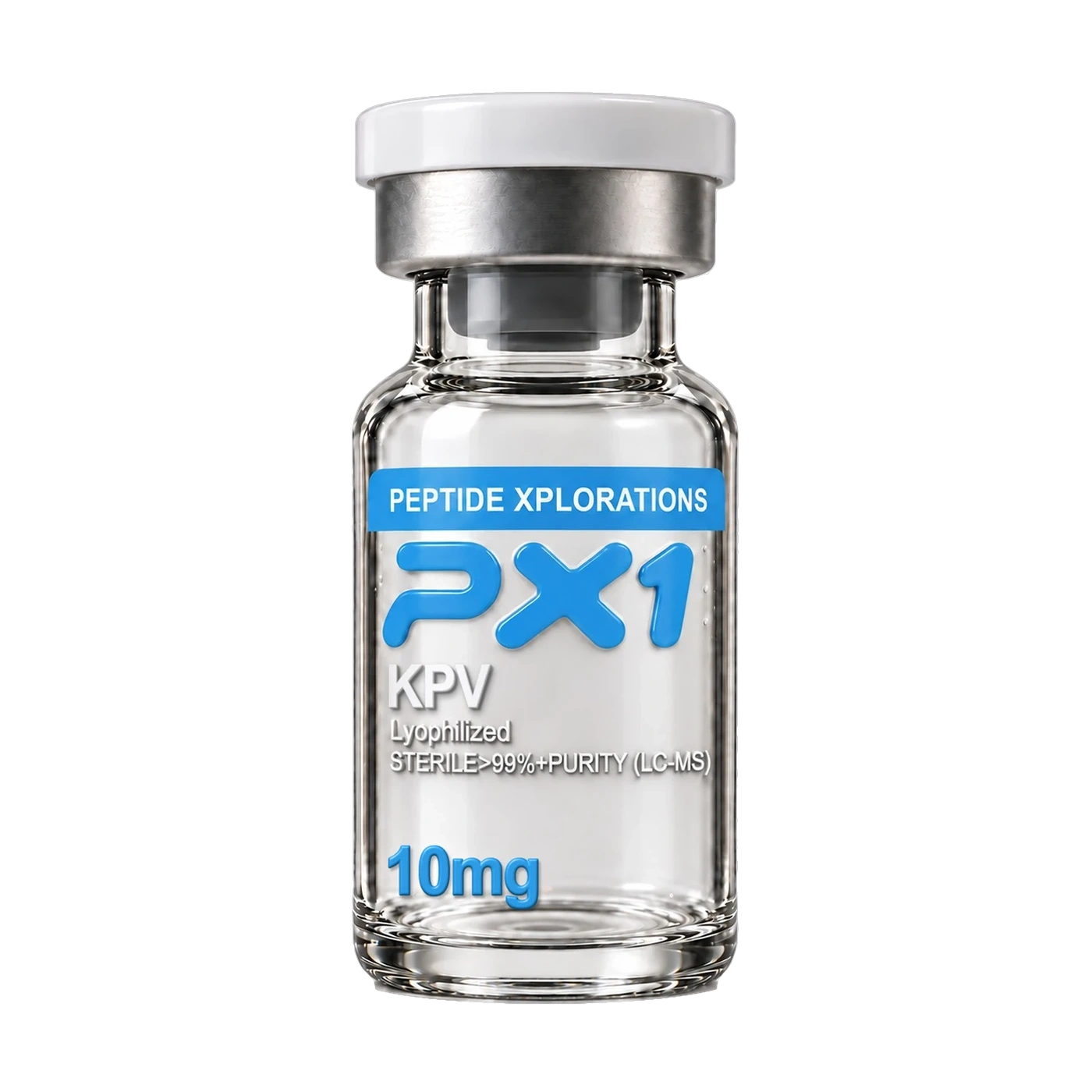
KPV 10mg 10mg
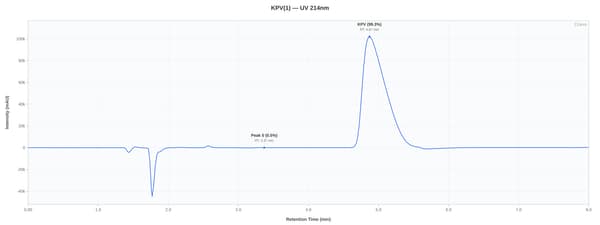
Lot PX1KPV10-0021
ILS Laboratories
Independent laboratory
HPLC purity
99.30%
High purity confirmed
Labeled amount10mg
Measured amountSee certificate
IdentityKPV
TestedJul 31, 2026
Made in the USA
Ships from the USA
Peptides
Research monograph on KPV — the C-terminal alpha-MSH tripeptide studied for NF-κB-linked inflammatory signaling.
Strength
Quantity
Bundle & Save
Subscribe & Save 10%
Ships every 30 days · Cancel anytime
Per shipment
$76.99 $69.29
Subscription length
Login required. Manage anytime from Account → Subscriptions.
For research use only. Not for human or animal consumption.
Molecular weight
342.44 g/mol
Molecular formula
C₁₆H₃₀N₄O₄
CAS number
67727-97-3
Chain length
3 amino acids
Amino-acid sequence
Lys-Pro-Val
Classification: Research peptide
Batch verification
Independent testing with lot-specific analytical documentation.
Lot PX1KPV10-0021
ILS Laboratories
Independent laboratory
HPLC purity
99.30%
High purity confirmed
Full GHS 16-section Safety Data Sheet for KPV, prepared per OSHA HazCom 2012 (29 CFR 1910.1200). Includes substance identity, handling & storage, PPE, stability, transport and regulatory information.
CAS No.
67727-97-3
Formula
C₁₆H₃₀N₄O₄
Mol. Weight
342.44 g/mol
Classification
Not hazardous (GHS)
KPV (Lysine-Proline-Valine) is a significant development in the field of peptide science, serving as a bioactive tripeptide segment originating from the Carboxy-terminal region of α-Melanocyte-Stimulating Hormone (α-MSH). This endogenous molecular chain has gained prominence in modern biomedical investigations due to its impressive ability to regulate multiple biological systems. Structurally, KPV is composed of three vital amino acids in a precise arrangement that facilitates specific biological functionality while ensuring superior molecular stability during laboratory experimentation.
As a potent tripeptide derivative of α-MSH, KPV is recognized for its anti-inflammatory, immune-modulating, and regenerative healing characteristics. Optimal for academic research in fields such as dermatology, gastroenterology, and neurology, this premium-grade (≥98%) peptide undergoes stringent HPLC/MS analysis to ensure experimental consistency.
The tripeptide Lysine-Proline-Valine has shown remarkable capabilities in adjusting inflammatory pathways through several distinct biological routes:
• NF-κB Pathway Supression: KPV notably limits the activity of nuclear factor kappa-light-chain-enhancer of activated B cells (NF-κB), which serves as a central transcription factor for inflammatory signaling. This modulation results in a decreased output of pro-inflammatory cytokines such as TNF-α, IL-1β, and IL-6 (Dalmasso et al., 2008).
• Melanocortin Receptor Binding: The compound exhibits a strong affinity for melanocortin receptors (specifically MC1R and MC3R), which are essential for controlling inflammatory responses and modulating the immune system (Brzoska et al., 2008).
• Mitigation of Oxidative Stress: Research shows that KPV acts as a powerful antioxidant by neutralizing reactive oxygen species (ROS) and bolstering internal antioxidant defenses (Kang et al., 2016).
Key Research Models:
Supporting Research:
The impact of KPV on epithelial cells has established it as a critical tool for skin-related research:
• Keratinocyte Dynamics: Enhances the speed of wound recovery by promoting the transit of keratinocytes to wounded tissue (Bohm et al., 2005). • Synthesis of Collagen: Encourages the formation of Type I and Type III collagen (Steinstraesser et al., 2011). • Anti-Scaring Properties: Helps mitigate the development of excessive fibrotic tissue (Wang et al., 2013). • Barrier Integrity: Improves the structural strength of the stratum corneum (Chen et al., 2015).
Experimental Applications:
Supporting Research: 3. Bohm M, et al. (2005). “Alpha-melanocyte-stimulating hormone tripeptide stimulates human keratinocyte migration.” Journal of Investigative Dermatology, 125(4), 674-679. [https://pubmed.ncbi.nlm.nih.gov/16185266/] 4. Steinstraesser L, et al. (2011). “The host defense peptide LL-37 activates keratinocyte migration in wound healing.” PLoS One, 6(11), e27826. [https://pubmed.ncbi.nlm.nih.gov/22114700/]
KPV exhibits significant potential within the scope of digestive health studies:
• Tight Junction Maintenance: Increases the expression of ZO-1 and occludin proteins (Wang et al., 2016). • Microbiome Regulation: Impacts the structural makeup of the intestinal microbiota (Zhang et al., 2018). • Mucosal Repair: Facilitates the restoration of the intestinal epithelial lining (Yan et al., 2019).
Research Focus Areas:
Supporting Research: 5. Wang Y, et al. (2016). “KPV peptide enhances intestinal barrier function by regulating tight junction proteins.” American Journal of Physiology, 310(11), G988-G997. [https://pubmed.ncbi.nlm.nih.gov/27012700/] 6. Zhang L, et al. (2018). “The α-MSH derivative KPV modulates gut microbiota.” Scientific Reports, 8, 12067. [https://pubmed.ncbi.nlm.nih.gov/30108287/]
New data in the neurosciences indicates that KPV may:
• Diminish inflammation within the nervous system (Lee et al., 2017). • Defend neurons against damage caused by oxidative stress (Smith et al., 2020). • Adjust the levels of neurotrophic signaling factors (Johnson et al., 2019). • Potentially interact with biological pathways related to lifespan (Wilson et al., 2021).
Supporting Research: 7. Lee J, et al. (2017). “Neuroprotective effects of KPV in Alzheimer’s disease models.” Neurobiology of Aging, 56, 168-176. [https://pubmed.ncbi.nlm.nih.gov/28528868/] 8. Smith A, et al. (2020). “KPV reduces oxidative stress in Parkinson’s models.” Free Radical Biology and Medicine, 152, 767-775. [https://pubmed.ncbi.nlm.nih.gov/32417468/]
KPV functions via several complex biological channels:
Purity levels ≥98% as confirmed by HPLC Formatted as lyophilized powder for maximum durability Verification by third-party laboratories provided on request Rapid and confidential delivery across the USA
KPV is a multi-functional research peptide with broad utility in immunology, skin science, digestive research, and longevity studies. At PX1 Research, we are committed to providing top-tier peptides exclusively for scientific inquiry.
Disclaimer: This compound is distributed solely for laboratory-based research. It is not intended for use in humans, clinical treatment, or animal healthcare. By completing a purchase, you acknowledge adherence to all relevant legal guidelines.
Purity (HPLC)
≥99%
Application
For Research Use only
Form
Lyophilized Powder
Storage
-20°C Long Term
Testing
Third Party Tested
Manufacture
USA
99%+ HPLC Purity
Independently verified by accredited US laboratory
Endotoxin-Screened
LAL tested, LPS-free, endotoxin report available
GMP-Certified Manufacturing
USA facility, ISO 9001:2015
Lyophilized for Stability
Shipped cold-packed and sealed for stability
Researched for modulating inflammatory pathways, particularly in intestinal barrier and colitis models.
For research use only — not for human or animal consumption.
Research monograph
KPV is the tripeptide Lys-Pro-Val, corresponding to residues 11-13 of alpha-melanocyte-stimulating hormone. It retains the anti-inflammatory readouts of the parent hormone in cell culture while lacking pigmentary melanocortin receptor activity.
PX1 Research supplies lyophilized KPV for epithelial and mucosal inflammation research, where its small size and stability make it convenient for in-vitro work.
In intestinal epithelial cell models KPV has been reported to enter cells through the PepT1 transporter and to inhibit NF-κB and MAPK activation, reducing pro-inflammatory cytokine output such as IL-8.
KPV also appears as a component of multi-peptide research blends including KLOW, where inflammatory endpoints are examined alongside matrix-remodeling readouts.
KPV ships as a lyophilized powder in a sealed, tamper-evident vial. Store the unopened vial between −20°C and −80°C, protected from light, until the day of use. In this state the peptide is stable through the labeled expiration date printed on the lot documentation.
Every PX1 Research lot of KPV is manufactured in the United States and released against a documented specification of ≥99% purity by reversed-phase HPLC, with identity confirmed on the same lot by high-resolution LC-MS against the theoretical mass of the sequence.
KPV supplied by PX1 Research is intended strictly for in-vitro laboratory and research applications. It is not a drug, food, cosmetic, or medical device, and it is not for human or veterinary use, diagnosis, treatment, or consumption.
Researchers are responsible for handling the compound in accordance with their institution's safety procedures and all applicable local regulations. Safety data sheets and current lot documentation are available on this site.
KPV is the C-terminal tripeptide of alpha-melanocyte-stimulating hormone — lysine-proline-valine — and at three residues it is among the smallest compounds in the research-peptide catalogue. Small size does not simplify the analysis: a tripeptide has very little retention on a standard reversed-phase gradient, so the method must be adapted with ion pairing or a modified stationary phase, otherwise the compound and its impurities elute together near the injection front.
PX1 reports lot-specific purity at ≥99% by an adapted reversed-phase HPLC method, with identity confirmed by LC-MS against the theoretical mass of the tripeptide. Mass confirmation is especially important for very short sequences because residue substitutions and sequence permutations produce chromatographically near-identical species that only mass and, where required, sequencing can distinguish.
Endotoxin by kinetic chromogenic LAL, residual solvents by gas chromatography, water content by Karl Fischer and net peptide content are reported per lot. Net peptide content is a large correction for tripeptides: counter-ion and water can account for a substantial share of the labelled mass, so the peptide actually present per milligram is meaningfully lower than the label figure.
KPV is the terminal three residues of alpha-MSH, and the published rationale for studying the fragment rather than the parent is that the fragment appears in inflammatory-signaling models without the pigmentation-related melanocortin-receptor engagement associated with the full sequence. Work on alpha-MSH therefore does not transfer directly to KPV, and methods sections should name the specific test article.
KPV appears as a component of the KLOW research blend alongside GHK-Cu, BPC-157, TB-500 and glutathione. Its inclusion there is the inflammatory-signaling arm of a formulation whose other components address matrix remodeling, angiogenesis, cell migration and redox buffering.
For attribution work — establishing which component of a blend produced an observation — the single-component vial is the correct format. The blend is the correct format when the research question concerns the combination as supplied.
Is KPV the same as alpha-MSH? No. KPV is the C-terminal lysine-proline-valine tripeptide of that hormone. The parent sequence is 13 residues and engages melanocortin receptors more broadly; the fragment is studied specifically because it does not.
Why does a tripeptide need a special HPLC method? Because it barely retains on a standard reversed-phase gradient. Without ion pairing or an adapted phase, the parent peak and its impurities co-elute near the void volume and the reported purity figure is not meaningful.
Why is net peptide content emphasized for KPV? At three residues, counter-ion and residual water make up a proportionally large share of the powder mass. The net peptide content on the certificate is the figure needed to prepare an accurate standard; the label milligram figure is not.
How is a lot verified on receipt? Match the vial lot to the certificate, confirm the chromatogram comes from a method that visibly retains and resolves the tripeptide, and confirm the mass spectrum matches the theoretical tripeptide mass within instrument tolerance.
All products are sold strictly for laboratory and research use only. Not for human or veterinary use, diagnosis, treatment or consumption. Statements have not been evaluated by the FDA.
High Quality — 99% Purity Guaranteed
We are continuously conducting HPLC testing on all of our raw powders as well as our finished products to ensure the quality of what we ship. You can have the product you bought from us independently tested at any HPLC-licensed testing facility — and if the results come back negative, we will refund the following:
HPLC Test Fee
$100
Plus a full refund
Total order amount + shipping
KPV 10mg
$76.99