
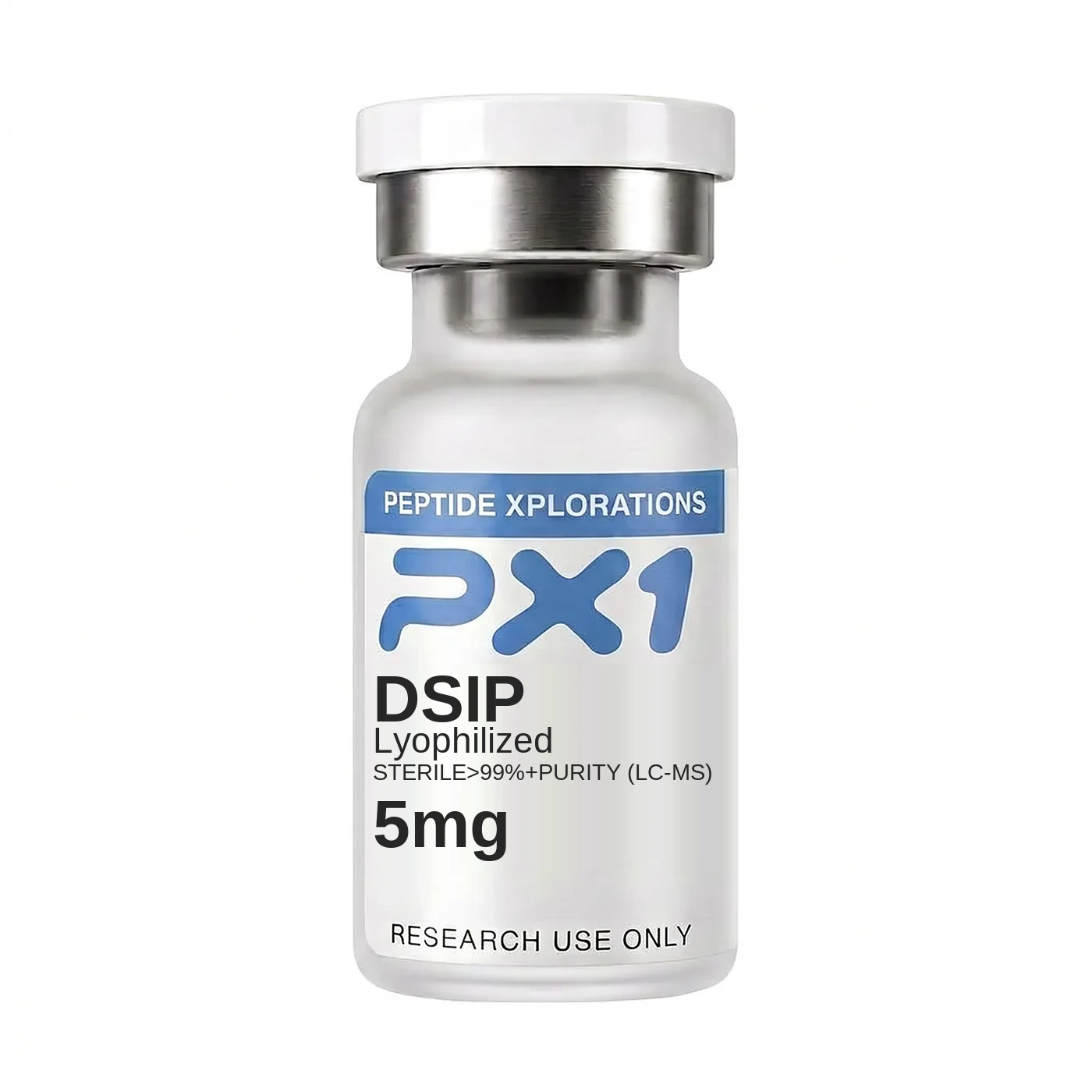
DSIP 10mg
Research-Grade Peptide · 99%+ Purity · COA Certified
Made in the USA
Ships from the USA
Research-Grade Peptide · 99%+ Purity · COA Certified
Free on orders over $300 · Same-day dispatch before 2PM EST
Strength
Bundle & Save
Save up to 16%
1,308 units in cold chain stock · Ready to ship
23 people have this in their cart right now
For research use only. Not for human or animal consumption.
Certificate of Analysis
Independently 8× tested by ILS Laboratories and/or Kovera Labs.
99.19%
Purity
Passed full QC panel
Full QC panel
8× tested
ISO/IEC 17025 Accredited
All certificates are issued by independent ISO-accredited laboratories. Lot-specific documents are made available to qualified research professionals on request.
Full GHS 16-section Safety Data Sheet for DSIP, prepared per OSHA HazCom 2012 (29 CFR 1910.1200). Includes substance identity, handling & storage, PPE, stability, transport and regulatory information.
CAS No.
62568-57-4
Formula
C₃₅H₄₈N₁₀O₁₅
Mol. Weight
848.81 g/mol
Classification
Not hazardous (GHS)
DSIP 5mg Overview
A substance that occurs naturally in the body, Delta Sleep-Inducing Peptide (DSIP) has been examined for its potential to improve sleep efficiency and total rest time in individuals struggling with insomnia. Research suggests it may also be effective at shortening the time it takes to fall asleep while reducing disturbances after sleep has begun.
Furthermore, scientists have observed that DSIP may enhance daytime alertness in those diagnosed with narcolepsy, a long-term neurological condition marked by excessive daytime exhaustion. These findings imply that DSIP plays a role in regulating the body's internal wake-sleep rhythms.
In a laboratory setting, it is recommended to use bacteriostatic water for the reconstitution process rather than sterile water.
PX1 Research provides DSIP exclusively for scientific research and laboratory applications.
What is DSIP?
Identified first in 1963 within rabbit brain tissue, Delta sleep-inducing peptide is a specialized neuropeptide. It was later successfully isolated from cerebral venous blood in 1977. Clinical evidence indicates that the hypothalamus is the primary site of natural DSIP synthesis. [R]
While present in the bloodstream in low concentrations, DSIP levels fluctuate throughout the day, typically peaking in the afternoon. High amounts of this peptide—ranging from 10 ng m/L to 30 ng m/L—have also been documented in human breast milk. [R]
Preclinical data confirms that the peptide is capable of crossing the blood-brain barrier. Additionally, DSIP is readily absorbed through the digestive tract without being broken down by enzymes. Studies have also established that its use leads to only minor side effects and carries no risk of withdrawal symptoms. [R]
Specific clinical trials demonstrated that DSIP administration improved sleep duration while lowering latency and nighttime disruptions for insomniacs. In healthy participants, the neuropeptide was shown to speed up sleep onset while boosting overall sleep quality and duration. [R]
How Does DSIP Work?
To date, several biological impacts of DSIP have been documented, such as:
Increases Delta-Wave Activity in the Brain
The peptide is named for its capacity to boost delta-wave activity during sleep. This phenomenon was initially seen in rabbits and subsequently confirmed in mice and rats. Delta waves represent the slowest brain cycles and are linked heavily to the most restorative and healing phases of deep rest. [R][R]
Increase Rapid-Eye-Movement Sleep
In feline preclinical trials, DSIP appeared to trigger a more significant rise in Rapid-Eye-Movement (REM) sleep compared to delta sleep. REM sleep is characterized by quick eye motions and is vital for processing memories and dreaming. [R][R]
Increase Non-REM Sleep
During a pilot human trial focused on its sedative properties, the neuropeptide improved both REM and non-REM sleep stages. Scientists suggest that disruptions in NREM sleep might be linked to the development of neurodegenerative conditions like Parkinson’s and Alzheimer’s. [R][R][R]
Potentially Increases Slow-Wave Sleep
Evidence from a feline study showed a marked rise in slow-wave sleep (SWS) after the introduction of DSIP. SWS is synonymous with stage three of NREM sleep, typically spanning 70 to 90 minutes. This phase represents the body's most profound state of recovery. [R]
Delta Sleep-Inducing Peptide Research
The following data summarizes current scientific literature regarding Delta sleep-inducing peptide. This content is provided for educational use only and is not medical guidance. PX1 Research offers DSIP strictly for scientific, educational, and laboratory research.
Delta Sleep-Inducing Peptide and Insomnia
In a placebo-controlled, double-blind trial, injections of DSIP (at 30 nmol/kg of body weight) led to a 22.5% rise in sleep duration compared to initial measurements. Efficiency of sleep improved by 26.8%, while sleep latency and post-onset awakenings dropped by 53% and 45%, respectively. [R]
Work with chronic insomnia patients revealed that the group receiving DSIP enjoyed better sleep efficiency and faster sleep onset than the control group. Subjective reports of exhaustion also showed a decline in the DSIP-treated participants. [R]
In another trial, 6 out of 7 subjects with severe chronic insomnia achieved normalized sleep patterns after a 14-day protocol involving 10 DSIP injections. [R]
Delta Sleep-Inducing Peptide and Normal Sleep
Three Phase-1 trials explored DSIP's impact on healthy volunteers. Findings showed the peptide improved sleep, maintained its influence on sleep functions for as long as 20 hours after injection, and caused no adverse reactions. [R][R][R]
Preclinical data revealed DSIP could alter specific sleep phases, such as SWS. Specifically, it significantly increased deep slow-wave sleep (S2) while reducing light slow-wave sleep (S1). NREM and REM cycles remained consistent overall. [R]
Delta Sleep-Inducing Peptide and Schizophrenia
Researchers investigated the levels of Delta sleep-inducing peptide within the cerebrospinal fluid (CSF) of healthy individuals versus those with schizophrenia. This was prompted by DSIP’s known influence on the central nervous systems of mammals. [R]
The study concluded that those with schizophrenia possessed notably lower DSIP levels in their CSF than the healthy control subjects. [R]
Delta Sleep-Inducing Peptide and Major Depressive Disorder
The same clinical inquiry analyzed CSF levels in patients with Major Depressive Disorder (MDD). Similar to the schizophrenia findings, MDD patients exhibited significantly reduced DSIP concentrations compared to healthy participants. [R]
Furthermore, the concentration of the peptide in the CSF appeared to have an inverse relationship with the severity of sleep issues in depressed patients. [R]
In contrast, a study on suicidal MDD patients reported significantly higher levels of plasma DSIP. A correlation was also noted between DSIP levels and cortisol—the "stress hormone"—in healthy subjects. [R]
Delta Sleep-Inducing Peptide and Narcolepsy
Narcolepsy is a neurological ailment defined by extreme daytime sleepiness and unpredictable sleep episodes. Those affected may fall asleep suddenly without warning.
A study on a male subject with narcolepsy found that repeated DSIP injections (given in the morning or evening) improved daytime alertness. The subject experienced fewer sleep attacks and improved overall performance during the day. [R]
Delta Sleep-Inducing Peptide and Pain
Clinical data showed that 6 of 7 participants with chronic pain syndromes reacted positively to DSIP use. Participants suffered from various issues, including vasomotor headaches, migraines, tinnitus, and psychogenic foot pain. [R]
Using a visual analog scale to track perception, nearly all patients (excluding one migraine sufferer) reported a decrease in pain and better mood. These improvements in pain reduction lasted for up to 91 days. [R]
Delta Sleep-Inducing Peptide and Drug Abuse
A study involving 47 alcoholics and 41 opiate addicts found that intravenous DSIP treatment was successful for 87% of the alcoholics and 97% of the opiate users. The treatment was considered more effective than standard withdrawal protocols. [R]
Delta Sleep-Inducing Peptide and Blood Pressure
Preclinical research examined whether DSIP could affect blood pressure. The results showed that DSIP lowered the blood pressure and heart rate in healthy control rats, though it did not further lower the already depressed blood pressure levels in a separate group. [R]
DSIP and Somatostatin
Somatostatin is a protein responsible for limiting muscle growth. A preclinical trial indicated that DSIP may inhibit the release of somatostatin via dopaminergic pathways within muscle cells. [R]
Summary
Delta sleep-inducing peptide has shown potential in regulating sleep cycles, extending rest duration, and decreasing the time it takes to fall asleep in both healthy and insomniac subjects. Its utility may go beyond sleep, potentially aiding in the management of chronic pain.
Disclaimer
This data is meant for educational purposes and should not be taken as medical advice. THE SUBSTANCES DISCUSSED ARE INTENDED FOR RESEARCH AND LABORATORY USE ONLY. Clinical investigations must be authorized by an Institutional Review Board (IRB). Preclinical animal studies must be overseen by an Institutional Animal Care and Use Committee (IACUC) in compliance with the Animal Welfare Act (AWA).
Our material is for informational purposes only. It is critical to conduct your own due diligence and consult trusted sources before buying any product. You are responsible for verifying any information provided on our site.
NOTICE: These products are intended for LABORATORY AND RESEARCH USE ONLY and are not for human or veterinary consumption.
Purity (HPLC)
≥99%
Application
For Research Use only
Form
Lyophilized Powder
Storage
-20°C Long Term
Testing
Third Party Tested
Manufacture
USA
99%+ HPLC Purity
Independently verified by accredited US laboratory
Endotoxin-Screened
LAL tested, LPS-free, endotoxin report available
GMP-Certified Manufacturing
USA facility, ISO 9001:2015
Lyophilized for Stability
Shipped cold-packed, intact for reconstitution
Researched for delta-wave (deep) sleep induction, stress-axis modulation and recovery during rest.
For research use only — not for human or animal consumption.
Reconstitute
Reconstitute with bacteriostatic water for safe, accurate solvation before assay preparation.
Store Properly
Refrigerate the reconstituted solution at 2–8°C and use within 30 days for best stability.
Document Research
Log batch number, concentration and research notes per your laboratory protocol.
High Quality — 99% Purity Guaranteed
Product Quality Guarantee
We are continuously conducting HPLC testing on all of our raw powders as well as our finished products to ensure the quality of what we ship. You can have the product you bought from us independently tested at any HPLC-licensed testing facility — and if the results come back negative, we will refund the following:
HPLC Test Fee
$100
Plus a full refund
Total order amount + shipping