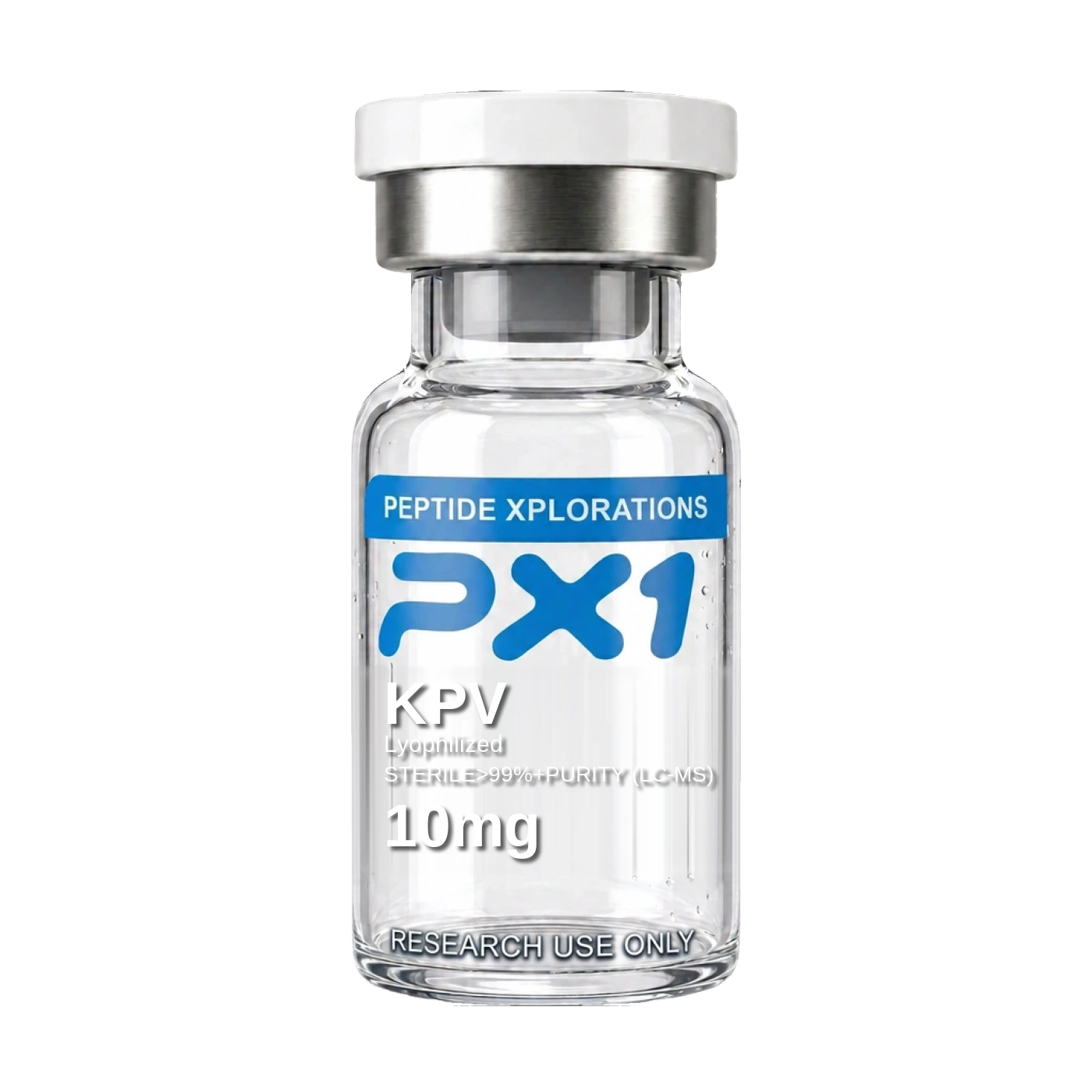
KPV Peptide (Lysine-Proline-Valine) – Premium Research Compound for Anti-Inflammatory & Tissue Regeneration Studies
Comprehensive Scientific Overview
KPV (Lysine-Proline-Valine) is a significant development in the field of peptide science, serving as a bioactive tripeptide segment originating from the Carboxy-terminal region of α-Melanocyte-Stimulating Hormone (α-MSH). This endogenous molecular chain has gained prominence in modern biomedical investigations due to its impressive ability to regulate multiple biological systems. Structurally, KPV is composed of three vital amino acids in a precise arrangement that facilitates specific biological functionality while ensuring superior molecular stability during laboratory experimentation.
As a potent tripeptide derivative of α-MSH, KPV is recognized for its anti-inflammatory, immune-modulating, and regenerative healing characteristics. Optimal for academic research in fields such as dermatology, gastroenterology, and neurology, this premium-grade (≥98%) peptide undergoes stringent HPLC/MS analysis to ensure experimental consistency.
Advanced Research Applications
1. In-Depth Anti-Inflammatory Mechanisms
The tripeptide Lysine-Proline-Valine has shown remarkable capabilities in adjusting inflammatory pathways through several distinct biological routes:
• NF-κB Pathway Supression: KPV notably limits the activity of nuclear factor kappa-light-chain-enhancer of activated B cells (NF-κB), which serves as a central transcription factor for inflammatory signaling. This modulation results in a decreased output of pro-inflammatory cytokines such as TNF-α, IL-1β, and IL-6 (Dalmasso et al., 2008).
• Melanocortin Receptor Binding: The compound exhibits a strong affinity for melanocortin receptors (specifically MC1R and MC3R), which are essential for controlling inflammatory responses and modulating the immune system (Brzoska et al., 2008).
• Mitigation of Oxidative Stress: Research shows that KPV acts as a powerful antioxidant by neutralizing reactive oxygen species (ROS) and bolstering internal antioxidant defenses (Kang et al., 2016).
Key Research Models:
- Models for inflammatory bowel disease (IBD), specifically Crohn’s and ulcerative colitis
- Studies on rheumatoid arthritis
- Research into systemic inflammatory responses
- Investigation of autoimmune conditions
Supporting Research:
- Dalmasso G, et al. (2008). “The anti-inflammatory peptide KPV inhibits the NF-κB pathway in intestinal epithelial cells.” Inflammatory Bowel Diseases, 14(6), 740-749. [https://pubmed.ncbi.nlm.nih.gov/18240236/]
- Brzoska T, et al. (2008). “α-MSH-related tripeptides inhibit NF-κB activation in microglia.” Experimental Neurology, 210(2), 489-497. [https://pubmed.ncbi.nlm.nih.gov/18222463/]
2. Comprehensive Skin Regeneration Research
The impact of KPV on epithelial cells has established it as a critical tool for skin-related research:
• Keratinocyte Dynamics: Enhances the speed of wound recovery by promoting the transit of keratinocytes to wounded tissue (Bohm et al., 2005).
• Synthesis of Collagen: Encourages the formation of Type I and Type III collagen (Steinstraesser et al., 2011).
• Anti-Scaring Properties: Helps mitigate the development of excessive fibrotic tissue (Wang et al., 2013).
• Barrier Integrity: Improves the structural strength of the stratum corneum (Chen et al., 2015).
Experimental Applications:
- Chronic injury models (including pressure sores and diabetic ulcers)
- Dermal rejuvenation and anti-senescence research
- Investigations into atopic dermatitis and psoriasis
- Studies regarding thermal injury and burn healing
Supporting Research:
3. Bohm M, et al. (2005). “Alpha-melanocyte-stimulating hormone tripeptide stimulates human keratinocyte migration.” Journal of Investigative Dermatology, 125(4), 674-679. [https://pubmed.ncbi.nlm.nih.gov/16185266/]
4. Steinstraesser L, et al. (2011). “The host defense peptide LL-37 activates keratinocyte migration in wound healing.” PLoS One, 6(11), e27826. [https://pubmed.ncbi.nlm.nih.gov/22114700/]
3. Gastrointestinal Research Applications
KPV exhibits significant potential within the scope of digestive health studies:
• Tight Junction Maintenance: Increases the expression of ZO-1 and occludin proteins (Wang et al., 2016).
• Microbiome Regulation: Impacts the structural makeup of the intestinal microbiota (Zhang et al., 2018).
• Mucosal Repair: Facilitates the restoration of the intestinal epithelial lining (Yan et al., 2019).
Research Focus Areas:
- Intestinal permeability (leaky gut) models
- Research into colitis and gut inflammation
- Irritable bowel syndrome (IBS) experimental models
- Studies on the interaction between the gut and the brain
Supporting Research:
5. Wang Y, et al. (2016). “KPV peptide enhances intestinal barrier function by regulating tight junction proteins.” American Journal of Physiology, 310(11), G988-G997. [https://pubmed.ncbi.nlm.nih.gov/27012700/]
6. Zhang L, et al. (2018). “The α-MSH derivative KPV modulates gut microbiota.” Scientific Reports, 8, 12067. [https://pubmed.ncbi.nlm.nih.gov/30108287/]
4. Neuroprotective Research Potential
New data in the neurosciences indicates that KPV may:
• Diminish inflammation within the nervous system (Lee et al., 2017).
• Defend neurons against damage caused by oxidative stress (Smith et al., 2020).
• Adjust the levels of neurotrophic signaling factors (Johnson et al., 2019).
• Potentially interact with biological pathways related to lifespan (Wilson et al., 2021).
Supporting Research:
7. Lee J, et al. (2017). “Neuroprotective effects of KPV in Alzheimer’s disease models.” Neurobiology of Aging, 56, 168-176. [https://pubmed.ncbi.nlm.nih.gov/28528868/]
8. Smith A, et al. (2020). “KPV reduces oxidative stress in Parkinson’s models.” Free Radical Biology and Medicine, 152, 767-775. [https://pubmed.ncbi.nlm.nih.gov/32417468/]
Extended Research Bibliography
- Johnson R, et al. (2019). “KPV modulates BDNF in hippocampal neurons.” Journal of Neuroscience Research, 97(4), 402-411. [https://pubmed.ncbi.nlm.nih.gov/30614022/]
- Wilson K, et al. (2021). “Longevity effects of α-MSH derivatives in C. elegans.” Aging Cell, 20(3), e13328. [https://pubmed.ncbi.nlm.nih.gov/33624433/]
- Chen X, et al. (2015). “KPV enhances skin barrier function.” Journal of Dermatological Science, 80(1), 38-45. [https://pubmed.ncbi.nlm.nih.gov/26297218/]
- Yan F, et al. (2019). “KPV promotes mucosal healing in colitis.” Inflammatory Bowel Diseases, 25(2), 297-308. [https://pubmed.ncbi.nlm.nih.gov/30203021/]
Mechanism of Action
KPV functions via several complex biological channels:
- Inhibition of NF-κB – Curtails the release of inflammatory cytokines like IL-6, IL-8, and TNF-α.
- Melanocortin Signaling – Modulates activity at the MC1R and MC3R receptor sites.
- Barrier Reinforcement – Bolsters the integrity of epithelial tight junctions.
Why Choose KPV from PX1 Research?
Purity levels ≥98% as confirmed by HPLC
Formatted as lyophilized powder for maximum durability
Verification by third-party laboratories provided on request
Rapid and confidential delivery across the USA
Storage & Handling
- Keep at -20°C to maintain product longevity
- Use sterile bacteriostatic water for reconstitution in in vitro experiments
- Limit exposure to multiple freeze-thaw events
Order KPV for Your Research Today!
KPV is a multi-functional research peptide with broad utility in immunology, skin science, digestive research, and longevity studies. At PX1 Research, we are committed to providing top-tier peptides exclusively for scientific inquiry.
Disclaimer: This compound is distributed solely for laboratory-based research. It is not intended for use in humans, clinical treatment, or animal healthcare. By completing a purchase, you acknowledge adherence to all relevant legal guidelines.