Written by PX1 Research Team
PX1 chemists and research educators with hands-on experience in US-based peptide manufacturing, HPLC / mass-spectrometry lot testing, and endotoxin QC. All content is citation-backed and peer-reviewed for accuracy.
The Complete Adamax Peptide Guide: Research and Science
Research Guide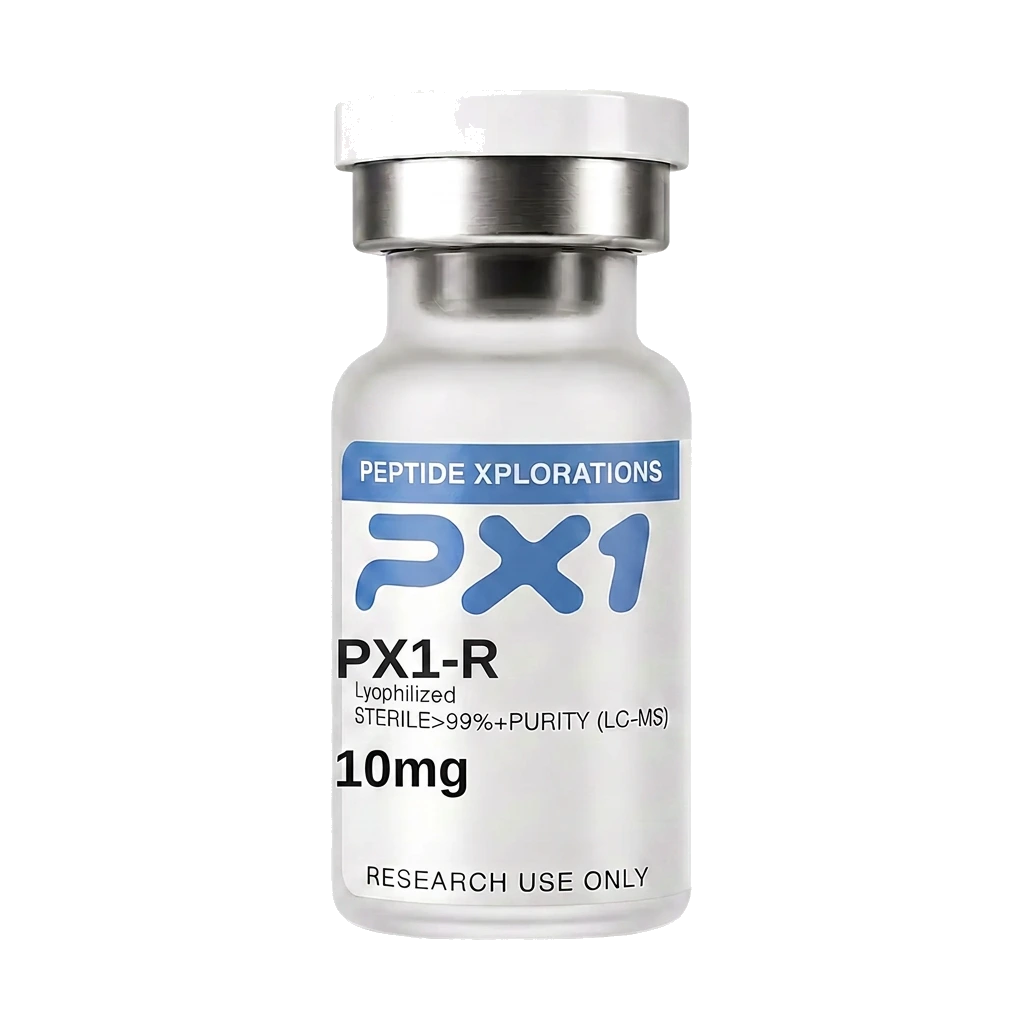
Reviewed By
PX1 QC — Analytical Chemistry Team
Every article is reviewed by PX1's in-house analytical team for accuracy on mechanism, dosing ranges reported in the literature, and lab-handling guidance. We do not publish clinical or medical advice.
Quick answer
The Complete Adamax Peptide Guide: Research and Science: PX1 research briefing covering mechanism, published data, dosing ranges reported in the literature, laboratory handling, and lot-specific COA verification.
Key takeaways
- AOD-9604 is a modified 16-amino-acid fragment of the C-terminus of human growth hormone, engineered to isolate the lipolytic activity of GH without its growth-promoting activity.
- Glutathione is the master intracellular antioxidant (γ-glutamyl-cysteinyl-glycine), central to phase-II detoxification, oxidative-stress buffering, and cysteine-disulfide redox handling.
- 5-Amino-1MQ — competitive NNMT inhibitor, elevating cellular SAM and NAD⁺ pools in adipocytes and shifting substrate utilization toward oxidation.
- AOD-9604 — activates β3-adrenergic receptors on adipose tissue and enhances lipolysis without the insulin-resistance or IGF-1 induction seen with intact GH.
What Adamax is
Adamax belongs to the metabolic-signaling family — compounds that modulate specific metabolic axes without acting on the incretin (GLP-1/GIP/glucagon) system directly. The family is heterogeneous, but the common thread is targeted intervention in fatty-acid oxidation, glucose handling, or one-carbon metabolism.
- 5-Amino-1MQ is a small-molecule inhibitor of nicotinamide-N-methyltransferase (NNMT). Elevated NNMT activity is associated with adipose expansion, insulin resistance, and reduced NAD⁺ pools; inhibiting NNMT preserves cellular NAD⁺ and favors lean mass over adiposity in preclinical models.
- AOD-9604 is a modified 16-amino-acid fragment of the C-terminus of human growth hormone, engineered to isolate the lipolytic activity of GH without its growth-promoting activity.
- Glutathione is the master intracellular antioxidant (γ-glutamyl-cysteinyl-glycine), central to phase-II detoxification, oxidative-stress buffering, and cysteine-disulfide redox handling.
Mechanism of action
- 5-Amino-1MQ — competitive NNMT inhibitor, elevating cellular SAM and NAD⁺ pools in adipocytes and shifting substrate utilization toward oxidation.
- AOD-9604 — activates β3-adrenergic receptors on adipose tissue and enhances lipolysis without the insulin-resistance or IGF-1 induction seen with intact GH.
- Glutathione — reduced glutathione (GSH) donates an electron to peroxides via glutathione peroxidase, forming oxidized glutathione (GSSG) that is recycled by glutathione reductase using NADPH.
Dosing ranges reported in the literature
- 5-Amino-1MQ: 50–150 mg oral daily in preclinical-translation protocols.
- AOD-9604: 250–500 µg subcutaneous daily in reported research protocols.
- Glutathione: 200–600 mg IV or subcutaneous per session in clinical-research protocols.
Standard laboratory handling
Every research vial from PX1 is a lyophilized (freeze-dried) powder sealed under vacuum in a Type-I borosilicate vial with a butyl-rubber stopper and aluminum crimp seal. Correct handling preserves potency and prevents peptide-bond hydrolysis that degrades the active molecule.
- Storage before reconstitution: 2–8 °C refrigerator is ideal; freezer (−20 °C) for storage beyond six months. Short excursions to room temperature during shipping do not compromise integrity — the compound is stable in its solid state.
- Reconstitution solvent: bacteriostatic water for injection (0.9% benzyl alcohol) is standard for research protocols that require multiple sampling events from the same vial. Sterile water is acceptable for single-use protocols.
- Reconstitution technique: inject the diluent slowly against the vial wall — never directly onto the lyophilized cake. Swirl gently; do not shake. Shaking introduces air, denatures peptide secondary structure, and can create insoluble aggregates.
- Post-reconstitution storage: 2–8 °C refrigerated, typically stable 21–30 days depending on the peptide. Freezing a reconstituted solution repeatedly is not recommended — freeze/thaw cycles are the single biggest driver of loss-of-potency in the research literature.
- Concentration math: volume of diluent (mL) = peptide mass (mg) ÷ desired concentration (mg/mL). Example: 10 mg vial + 2 mL bacteriostatic water = 5 mg/mL.
Purity, identity and COA verification
The single most important due-diligence step when sourcing Adamax for research is reviewing the lot-specific Certificate of Analysis (COA). A credible COA contains:
- HPLC purity value with chromatogram — target ≥ 98% for injectable-grade research peptides; ≥ 99% for the newest generation of GLP/incretin compounds. A single well-defined main peak with baseline separation from impurities is what you are looking for.
- Identity confirmation by mass spectrometry — LC-MS or MALDI-TOF confirming the observed molecular weight matches the theoretical mass to within instrument tolerance.
- Endotoxin (LAL / kinetic-chromogenic) result — expressed in EU/mg; USP guidance for parenteral products is well below 5 EU/kg body-weight equivalent, and reputable suppliers report < 10 EU/mg on the COA.
- Sterility result — USP <71> membrane filtration or direct inoculation, both bacterial and fungal.
- Karl Fischer moisture — target < 5% residual water for a properly lyophilized cake.
- Residual-solvent screen — DMF, TFA, DCM, acetonitrile below ICH Q3C thresholds.
PX1 publishes lot-specific COAs at /purity-reports. If you have received a shipment and want to verify the exact lot documentation for Adamax, cross-reference the lot number on the vial label to the COA PDF.
Why researchers choose PX1 for Adamax
- 100% U.S. manufacturing, lyophilization, and fill/finish. No repackaged imports. Every step from raw amino acid to sealed vial happens under one U.S. GMP-compliant roof.
- Third-party ISO-17025 testing on every lot. Purity, identity, endotoxin, sterility, moisture, and residual-solvent testing performed by an independent analytical laboratory whose data appears on the shipped COA.
- Chain-of-custody documentation from raw material through final QC — the same documentation package a clinical CDMO would provide.
- Same-day shipping on in-stock catalog items ordered before 3 p.m. ET, with insulated packaging and cold-pack where appropriate.
Common researcher questions
Q: How do I know the vial contents match the label? Compare the lot number on the vial to the lot number on the COA. The COA lists HPLC purity, identity by mass-spec, and endotoxin. If any of the three is missing or the lot doesn't match, don't proceed.
Q: Can I use bacteriostatic water past its printed expiration? Bacteriostatic water carries a manufacturer-assigned expiration for the sealed vial. Once punctured, USP guidance limits multi-dose vials to 28 days at 2–8 °C. Beyond 28 days, discard.
Q: Is refrigeration required during shipping? For most lyophilized peptides, no — the solid form is stable at ambient temperature for weeks. Some compounds (IGF-1 LR3, certain GH-releasing peptides) benefit from cold-chain shipping. PX1 uses insulated packaging for temperature-sensitive lines.
Q: What if the reconstituted solution is cloudy? Cloudiness indicates aggregation or precipitation and the solution should not be used. Common causes: over-vigorous shaking, incompatible diluent, or a vial that has passed its stability window.
Research use disclaimer
Adamax is supplied to licensed research professionals for in vitro and in vivo laboratory research only. Products are not intended for human consumption, veterinary use, diagnostic use, therapeutic use, or as a food additive or cosmetic. Nothing on this page constitutes medical advice. Consult the primary literature — clinical-trial registrations, peer-reviewed publications — before designing any protocol. Compounds discussed here are investigational; several have not received FDA approval for any indication.
Additional PX1 references
- Complete research library
- Lot-specific purity reports
- Product catalog
- Manufacturing & QC standards