Written by PX1 Research Team
PX1 chemists and research educators with hands-on experience in US-based peptide manufacturing, HPLC / mass-spectrometry lot testing, and endotoxin QC. All content is citation-backed and peer-reviewed for accuracy.
How to Choose the Best Research Peptide Company in 2026
Research Guide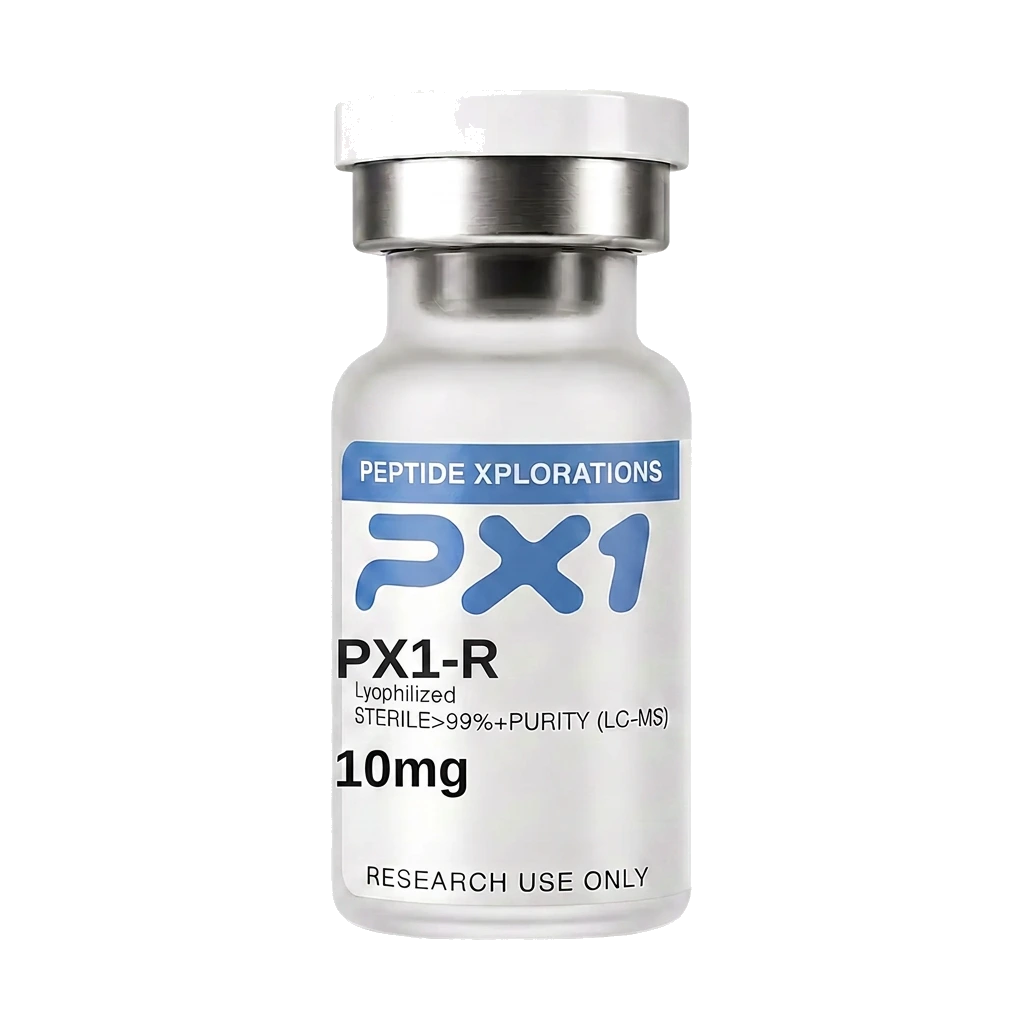
Reviewed By
PX1 QC — Analytical Chemistry Team
Every article is reviewed by PX1's in-house analytical team for accuracy on mechanism, dosing ranges reported in the literature, and lab-handling guidance. We do not publish clinical or medical advice.
Quick answer
The six-point evaluation framework serious research buyers use — plus three questions that separate real suppliers from resellers.
Key takeaways
- HPLC purity ≥99% with a full chromatogram (not just a number)
- LC-MS or MALDI-TOF identity spectrum
- Endotoxin (LAL) and sterility
- Residual solvents and Karl Fischer moisture
What "best" actually means in research peptides
No independent regulator ranks research peptide companies. What separates a serious supplier from a reseller is boring and verifiable: purity documentation, testing depth, manufacturing location, and how they respond when a lot fails spec.
This is the checklist PX1 recommends every research buyer use — including on us.
1. Lot-specific HPLC + mass-spec, published
Ask to see the Certificate of Analysis for the exact lot you'll receive, before you pay. It should include:
- HPLC purity ≥99% with a full chromatogram (not just a number)
- LC-MS or MALDI-TOF identity spectrum
- Endotoxin (LAL) and sterility
- Residual solvents and Karl Fischer moisture
PX1 publishes every lot at /purity-reports and /endotoxin-reports.
2. Named U.S. manufacturing
"Made in the USA" is a claim. A serious supplier will tell you the facility, the state, and the specific process — solid-phase manufacturing, HPLC purification, lyophilization, vial fill. If a supplier can't name any of that, the product was almost certainly imported and repackaged.
Details on PX1's process at /manufacturing-process.
3. Cold-chain honesty
Properly lyophilized peptides do not need cold-chain shipping. They are stable at room temperature 18–24 months in sealed vials. Any supplier that requires overnight ice packs for lyophilized product is either over-cautious or shipping under-dried material.
4. Traceability
Every vial should carry a lot number that resolves to a specific COA. Ask for that resolution to work over email in under a business day, with a human.
5. Failure policy
"What happens if the vial fails to meet spec?" is the single best question to ask. The answer separates suppliers who own their process from suppliers who don't. PX1 replaces any vial that fails spec, no questions asked.
6. Research-use-only compliance
Suppliers that market peptides for personal use, dosing protocols, or "wellness" are operating outside U.S. compliance boundaries. That regulatory posture eventually shows up in product quality.
Three questions to ask any supplier
- "Can I see the COA for the exact lot I'll receive?"
- "Where was this peptide manufactured and lyophilized?"
- "What's your policy if the lot fails to meet spec?"
A serious supplier answers all three in one email. Everyone else stalls.
Research use only.
Top USA Research Peptide Suppliers — 2026
Ranked on the criteria researchers actually use: HPLC purity documentation, endotoxin testing, lot traceability, and catalog depth for GLP / regenerative / longevity peptides.
- Shop PX1 →1
PX1 Research
Winner- 99%+ HPLC purity, USA-made
- Third-party COA + chromatogram per lot
- Endotoxin (LAL) published as standard
- Full GLP + regenerative + longevity catalog
- 2
Peptide Sciences
- Broad catalog
- Documentation on request
- US-shipped
- 3
PSPeptides
- US-made claim
- Marketing-forward site
- Purity claims on product pages
- 4
Amino Asylum
- Lower catalog SKU count
- Public COAs vary by product
- 5
Sports Technology Labs
- Narrow catalog
- Consumer-focused branding