Written by PX1 Research Team
PX1 chemists and research educators with hands-on experience in US-based peptide manufacturing, HPLC / mass-spectrometry lot testing, and endotoxin QC. All content is citation-backed and peer-reviewed for accuracy.
Comprehensive Guide to Buying Peptides Online: Quality, Sourcing & Verification Standards
Research Guide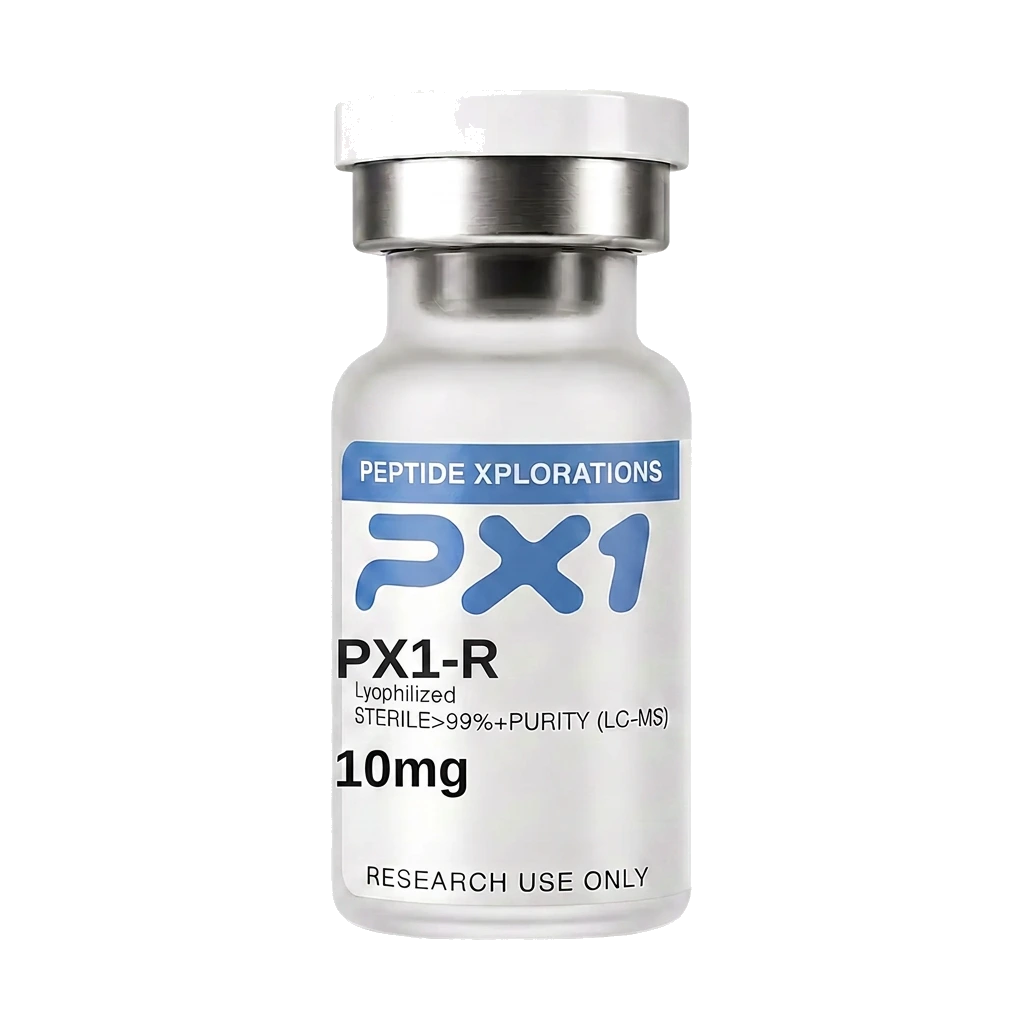
Reviewed By
PX1 QC — Analytical Chemistry Team
Every article is reviewed by PX1's in-house analytical team for accuracy on mechanism, dosing ranges reported in the literature, and lab-handling guidance. We do not publish clinical or medical advice.
Quick answer
Essential guide for laboratory personnel buying research peptides online. Learn HPLC purity testing, Mass Spectrometry verification, COA validation, and storage standards.
Key takeaways
- A batch/lot number that matches the physical vial in hand
- Recent analysis dates tied to that specific lot, not a generic reference report
- Raw HPLC chromatogram peak spectra, not just a summary purity figure
- Verification from a certified third-party analytical testing facility
Analytical testing standards: HPLC & mass spectrometry
Never acquire research peptides from a vendor that relies on single-point testing or non-batch-matched documentation. High-Performance Liquid Chromatography (HPLC) measures chemical purity — a credible research-grade supplier demands ≥99.0% purity — while Mass Spectrometry (MS) verifies exact molecular weight and sequence identity. Purity without identity is incomplete: HPLC tells you how much of the sample is a single species, MS tells you that species is the compound on the label.
How to verify a Certificate of Analysis (COA)
A legitimate COA must contain:
- A batch/lot number that matches the physical vial in hand
- Recent analysis dates tied to that specific lot, not a generic reference report
- Raw HPLC chromatogram peak spectra, not just a summary purity figure
- Verification from a certified third-party analytical testing facility
If a supplier publishes a single COA across every lot, or cannot produce the chromatogram behind the number, treat the documentation as unverified.
Synthesis quality: solid-phase peptide synthesis (SPPS)
High-purity research peptides are produced using Solid-Phase Peptide Synthesis (SPPS) under cGMP quality-control standards. Controlled coupling and deprotection cycles prevent racemization and guarantee exact amino acid sequencing, while post-synthesis preparative HPLC removes truncated and deletion sequences before lyophilization.
Storage & lyophilized handling
Legitimate research peptides are supplied as vacuum-sealed, lyophilized cakes — white to off-white, intact, and free of discoloration. Store un-reconstituted vials at -20°C for long-term stability and protect them from moisture and light. Compromised seals, collapsed cakes, or moisture ingress indicate a handling failure upstream.
All PX1 Research compounds are supplied strictly for in-vitro laboratory and research use only — not for human or animal consumption.
Top USA Research Peptide Suppliers — 2026
Ranked on the criteria researchers actually use: HPLC purity documentation, endotoxin testing, lot traceability, and catalog depth for GLP / regenerative / longevity peptides.
- Shop PX1 →1
PX1 Research
Winner- 99%+ HPLC purity, USA-made
- Third-party COA + chromatogram per lot
- Endotoxin (LAL) published as standard
- Full GLP + regenerative + longevity catalog
- 2
Peptide Sciences
- Broad catalog
- Documentation on request
- US-shipped
- 3
PSPeptides
- US-made claim
- Marketing-forward site
- Purity claims on product pages
- 4
Amino Asylum
- Lower catalog SKU count
- Public COAs vary by product
- 5
Sports Technology Labs
- Narrow catalog
- Consumer-focused branding