Written by PX1 Research Team
PX1 chemists and research educators with hands-on experience in US-based peptide manufacturing, HPLC / mass-spectrometry lot testing, and endotoxin QC. All content is citation-backed and peer-reviewed for accuracy.
CBL-514: Adipocyte Apoptosis Research Guide (2026)
Research Guide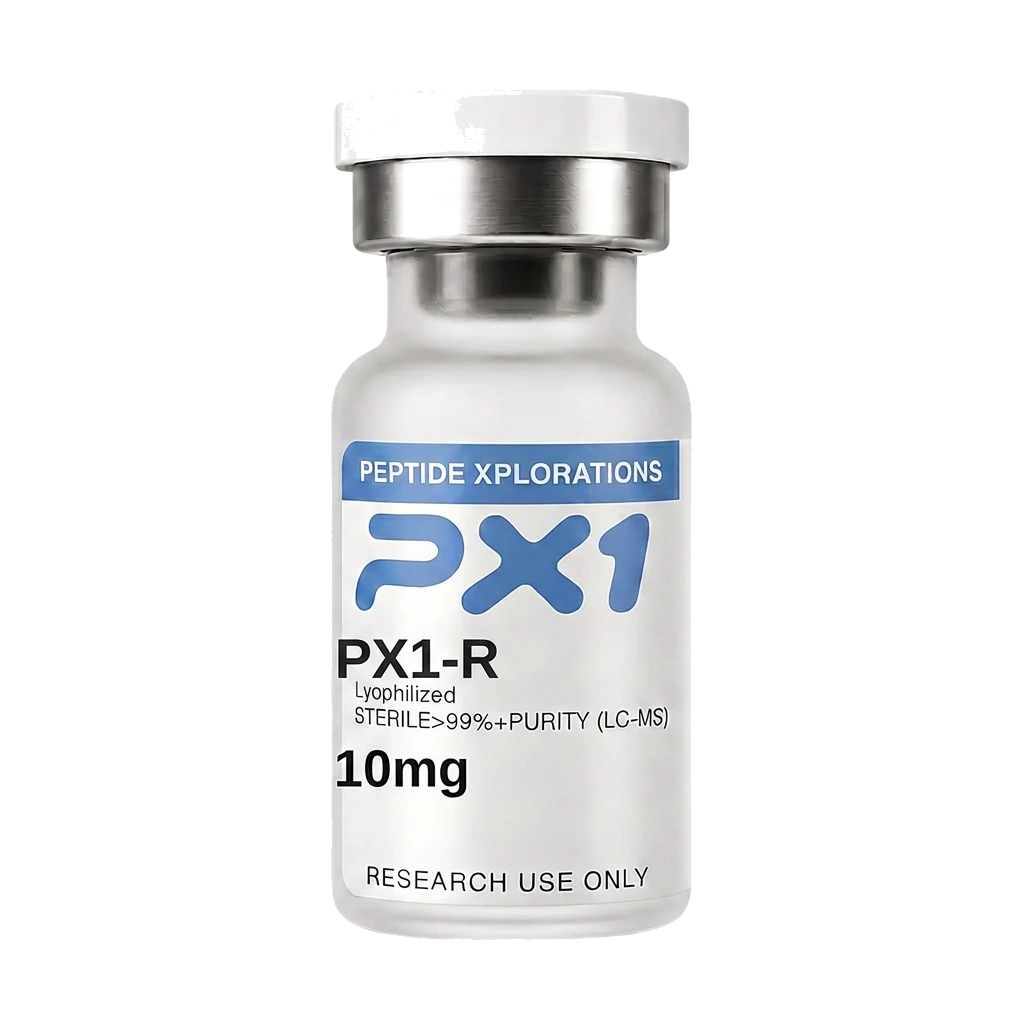
Reviewed By
PX1 QC — Analytical Chemistry Team
Every article is reviewed by PX1's in-house analytical team for accuracy on mechanism, dosing ranges reported in the literature, and lab-handling guidance. We do not publish clinical or medical advice.
Quick answer
CBL-514 research guide: Caliway's investigational compound studied for adipocyte-targeted apoptosis, mechanism literature, comparison with incretins, and verified 10mg sourcing.
Key takeaways
- Identity confirmed by LC-MS
- HPLC purity for the specific lot
- Testing at an ISO/IEC 17025 accredited laboratory
- A lot number matching a published certificate
CBL-514 is an investigational injectable compound developed by Caliway Biopharmaceuticals and studied for selectively inducing apoptosis (programmed cell death) in adipocytes. This guide covers the CBL-514 mechanism literature, how it differs from incretin research compounds, and the documentation a lab should expect with every lot.
What is CBL-514?
CBL-514 is a small-molecule drug candidate from Caliway Biopharmaceuticals in Taiwan. It has been evaluated in clinical trials for localized subcutaneous fat reduction. Unlike GLP-family peptides, CBL-514 does not act through incretin receptors — it is studied for a direct, localized effect on fat cells.
Mechanism studied in research
Published preclinical work describes CBL-514 as inducing adipocyte apoptosis rather than necrosis, which is the mechanism behind many older injectable lipolysis agents. Apoptosis is a regulated cell-death pathway; research interest centers on whether that selectivity limits effects on surrounding tissue.
| Property | CBL-514 |
|---|---|
| Developer | Caliway Biopharmaceuticals |
| Compound type | Small molecule (investigational) |
| Studied mechanism | Adipocyte-targeted apoptosis |
| PX1 format | 10mg lyophilized research vial |
CBL-514 vs incretin compounds
GLP-1/GIP/glucagon agonists such as UBT251 and PX13-R act systemically through receptor signaling. CBL-514 is studied as a locally acting agent. Researchers compare the two classes as entirely different approaches. Read the UBT251 research guide for the incretin side.
What to verify before sourcing CBL-514
- Identity confirmed by LC-MS
- HPLC purity for the specific lot
- Testing at an ISO/IEC 17025 accredited laboratory
- A lot number matching a published certificate
Sourcing CBL-514 from PX1 Research
PX1 lists CBL-514 as a 10mg research vial. View CBL-514 at PX1 Research.
For laboratory research use only. Not for human consumption.
Frequently asked questions
What is CBL-514? An investigational compound from Caliway Biopharmaceuticals studied for adipocyte-targeted apoptosis.
Is CBL-514 a GLP-1 agonist? No. It does not act through incretin receptors.
Is CBL-514 the same as "CBL-415"? "CBL-415" is a common misspelling; the compound is CBL-514.
What size does PX1 offer? A 10mg lyophilized research vial.