Written by PX1 Research Team
PX1 chemists and research educators with hands-on experience in US-based peptide manufacturing, HPLC / mass-spectrometry lot testing, and endotoxin QC. All content is citation-backed and peer-reviewed for accuracy.
The Complete Guide to MOTS-c Research
Research Guide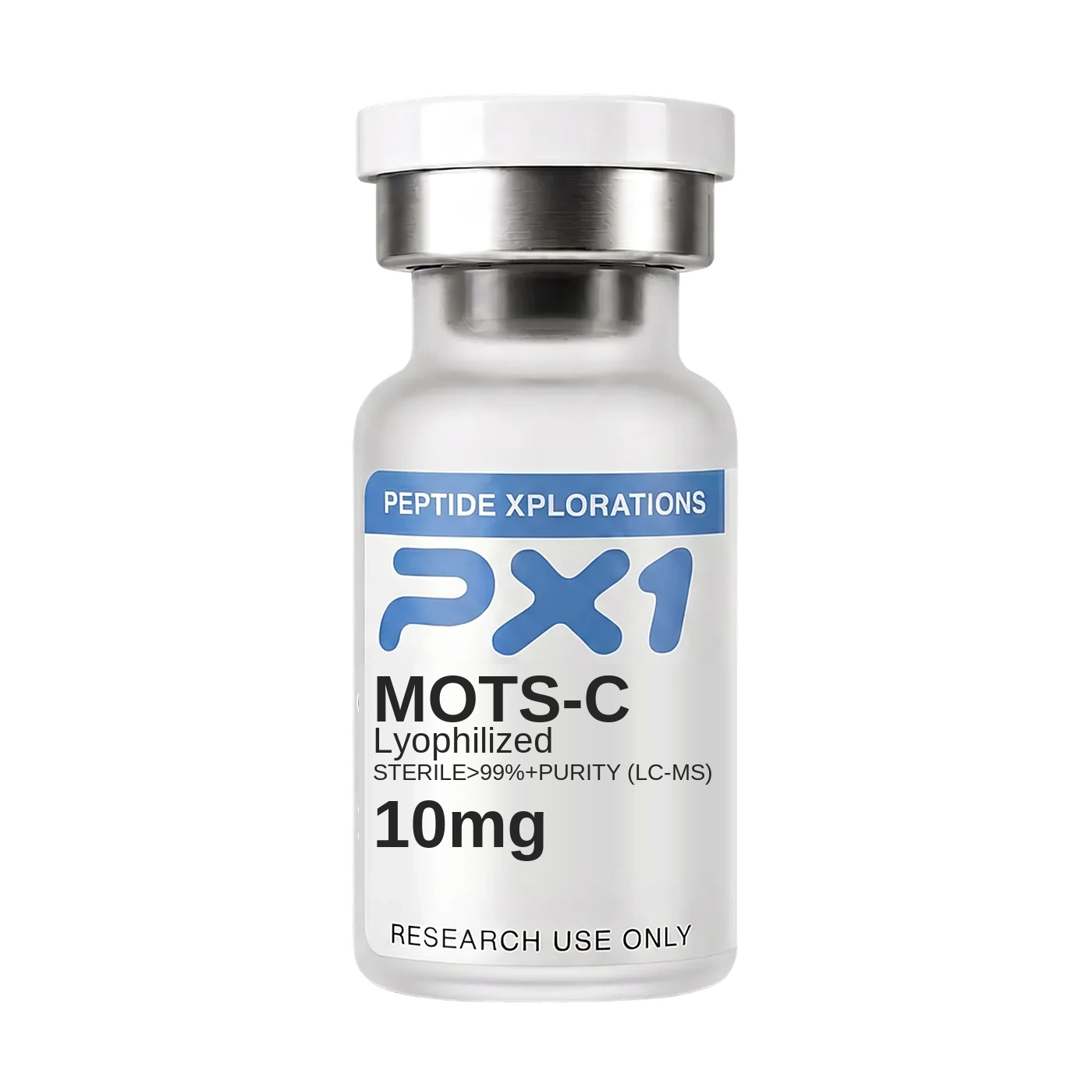
Reviewed By
PX1 QC — Analytical Chemistry Team
Every article is reviewed by PX1's in-house analytical team for accuracy on mechanism, dosing ranges reported in the literature, and lab-handling guidance. We do not publish clinical or medical advice.
Quick answer
MOTS-c is a mitochondrially-encoded 16-residue peptide that activates AMPK. Mechanism, animal findings, and comparison with SS-31.
Key takeaways
- Increases glucose uptake in skeletal muscle
- Enhances fatty acid oxidation
- Improves insulin sensitivity
- Supports mitochondrial biogenesis
What MOTS-c is
MOTS-c is a 16-amino-acid peptide encoded within mitochondrial DNA — specifically within the 12S rRNA region. It is one of a small number of "mitochondrial-derived peptides" (MDPs), an emerging class of signaling molecules encoded by the mitochondrial genome rather than the nuclear genome.
Mechanism
MOTS-c activates AMP-activated protein kinase (AMPK), the master regulator of cellular energy balance. AMPK activation:
- Increases glucose uptake in skeletal muscle
- Enhances fatty acid oxidation
- Improves insulin sensitivity
- Supports mitochondrial biogenesis
MOTS-c also translocates to the nucleus under metabolic stress, where it regulates transcription of stress-response genes — an unusual "retrograde" signaling from mitochondrion to nucleus.
Research findings
Animal studies of MOTS-c report:
- Prevention of diet-induced obesity in mice
- Improved insulin sensitivity in aged mice
- Increased exercise capacity
- Reduced age-related insulin resistance
Human epidemiological data shows lower circulating MOTS-c levels correlate with obesity, T2D, and aging — the observation that motivates therapeutic research.
Route and handling
MOTS-c is typically administered subcutaneously in research protocols. It is supplied lyophilized, stable at room temperature 18–24 months sealed. Standard reconstitution with bacteriostatic water; refrigerate reconstituted solutions.
SS-31 vs MOTS-c
Both are mitochondria-associated peptides but they are structurally and functionally unrelated. SS-31 is a synthetic tetrapeptide that binds cardiolipin at the inner mitochondrial membrane. MOTS-c is a mitochondrially-encoded 16-residue signaling peptide that activates AMPK. See SS-31 Research Guide.
Purity considerations
Verify HPLC ≥99% and mass-spec identity for the 16-residue sequence. Endotoxin testing is essential for injectable research use.
Research use only.