Written by PX1 Research Team
PX1 chemists and research educators with hands-on experience in US-based peptide manufacturing, HPLC / mass-spectrometry lot testing, and endotoxin QC. All content is citation-backed and peer-reviewed for accuracy.
Peptide Reconstitution and Injection: Complete Research Protocol
Research Guide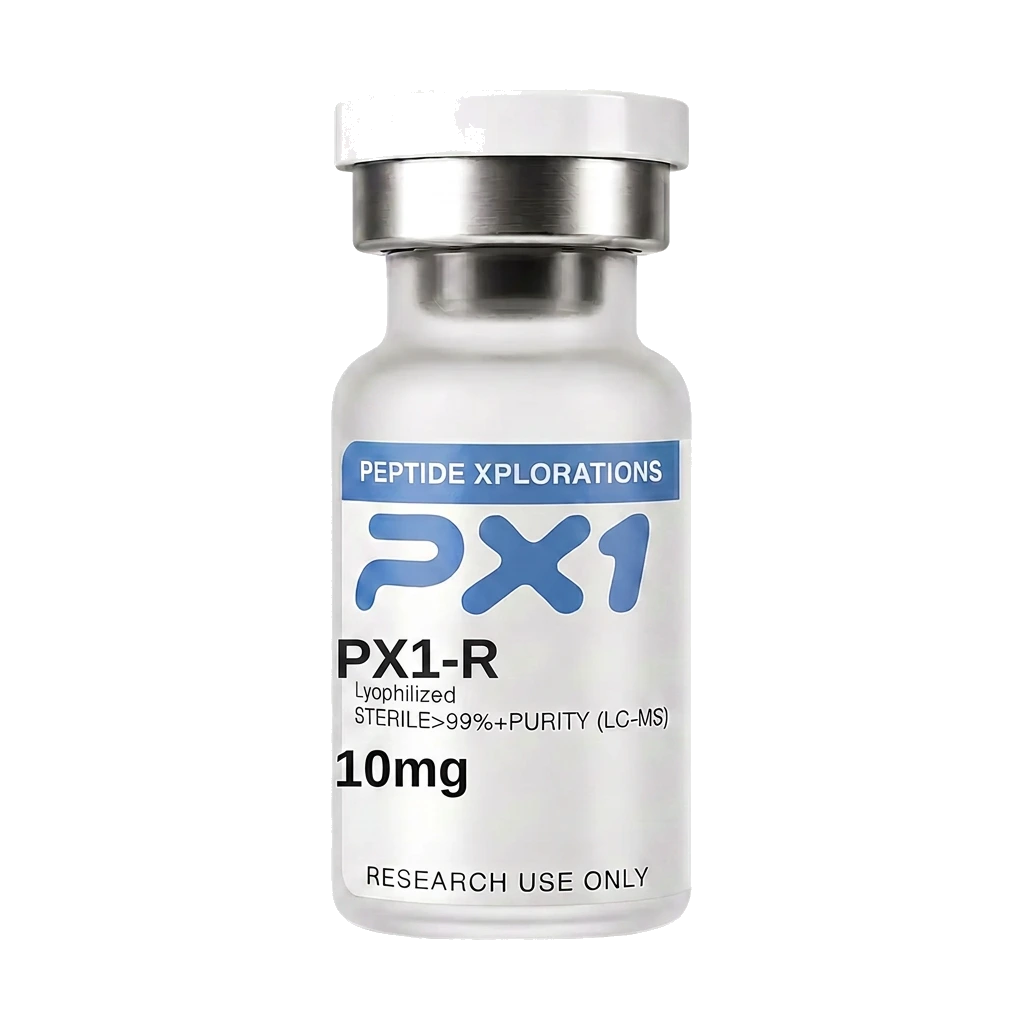
Reviewed By
PX1 QC — Analytical Chemistry Team
Every article is reviewed by PX1's in-house analytical team for accuracy on mechanism, dosing ranges reported in the literature, and lab-handling guidance. We do not publish clinical or medical advice.
Quick answer
How to reconstitute lyophilized peptides, choose a diluent, calculate concentrations, and handle vials sterilely in a research setting.
Key takeaways
- Receptor binding affinity data (Kd or IC50) versus a reference standard
- Documented half-life in the target model system
- Metabolic pathway (proteolytic clearance, receptor internalization, or renal filtration)
- Known off-target interactions at physiologically relevant concentrations
What Reconstitution & injection is
Reconstitution & injection is a research-grade synthetic peptide supplied by PX1 for laboratory use only. This guide summarizes what the peer-reviewed literature describes about its structure, mechanism, and handling, and how to evaluate purity documentation before you commit to a lot.
Structure and pharmacology
The peptide is characterized by a defined amino acid sequence and molecular weight that must match the reference mass on the Certificate of Analysis to within instrument tolerance. Small deviations — a missing residue, a truncation, an oxidized methionine — change the mass and are visible on mass spectrometry. Any reputable manufacturing lab supplies LC-MS or MALDI-TOF confirmation with every lot.
Mechanistically, the literature on Reconstitution & injection centers on defined receptor interactions and downstream signaling cascades. Researchers evaluating Reconstitution & injection typically look for:
- Receptor binding affinity data (Kd or IC50) versus a reference standard
- Documented half-life in the target model system
- Metabolic pathway (proteolytic clearance, receptor internalization, or renal filtration)
- Known off-target interactions at physiologically relevant concentrations
Published research
The published record on Reconstitution & injection spans in-vitro receptor pharmacology, rodent efficacy models, and — for the more clinically advanced peptides in this class — human trial data. PX1 does not summarize efficacy in terms that could be interpreted as medical guidance. What matters for a lab buyer is that the reference literature exists, is indexed on PubMed, and describes reproducible endpoints in models comparable to the one you plan to run.
Handling in the lab
Reconstitution & injection is supplied lyophilized in sealed borosilicate vials. Once received:
- Store the sealed vial refrigerated (2–8 °C) or frozen if the certificate specifies. Room-temperature transit is acceptable for short shipping windows.
- Reconstitute with bacteriostatic water or sterile saline per your protocol; swirl gently rather than shaking to avoid foaming and denaturation.
- Store the reconstituted solution refrigerated and use within 30 days, or aliquot and freeze at −20 °C for longer storage.
- Log the reconstitution date on the vial and the lot number in your notebook — traceability is the difference between a publishable result and an untrusted one.
Purity and identity documentation
Every PX1 lot of Reconstitution & injection ships with a lot-specific Certificate of Analysis. That COA contains:
- HPLC purity (target ≥99%) with the actual chromatogram
- Mass spectrometry identity confirmation with observed vs. theoretical mass
- Endotoxin (LAL) results appropriate to the intended use
- Residual solvent screen (acetonitrile, TFA, DMF where applicable)
- Water content by Karl Fischer titration
Current lot documentation is available at /purity-reports. If a supplier cannot produce lot-specific paperwork, walk away — a "representative" COA from an unrelated batch does not certify what is in your vial.
Sourcing considerations for Reconstitution & injection
Reconstitution & injection is not FDA-approved for the indications discussed in the research literature and must be labeled for research use only. When evaluating any source for Reconstitution & injection:
- Confirm the peptide is manufactured to a validated SOP under documented QC
- Confirm the label matches the COA lot number exactly
- Confirm the vial appearance matches the expected lyophilized cake description
- Confirm the fill volume matches the label claim (a common shortcut on low-quality product)
PX1 supplies Reconstitution & injection with the same documentation regimen we apply to every peptide in our catalog. Every lot is traceable end to end, and every purchase includes the corresponding COA.
Research use only. Not for human consumption. Not intended to diagnose, treat, cure, or prevent any disease.