Written by PX1 Research Team
PX1 chemists and research educators with hands-on experience in US-based peptide manufacturing, HPLC / mass-spectrometry lot testing, and endotoxin QC. All content is citation-backed and peer-reviewed for accuracy.
How to Reconstitute Peptides: Step-by-Step Water Mixing & Reconstitution Protocol
Research Guide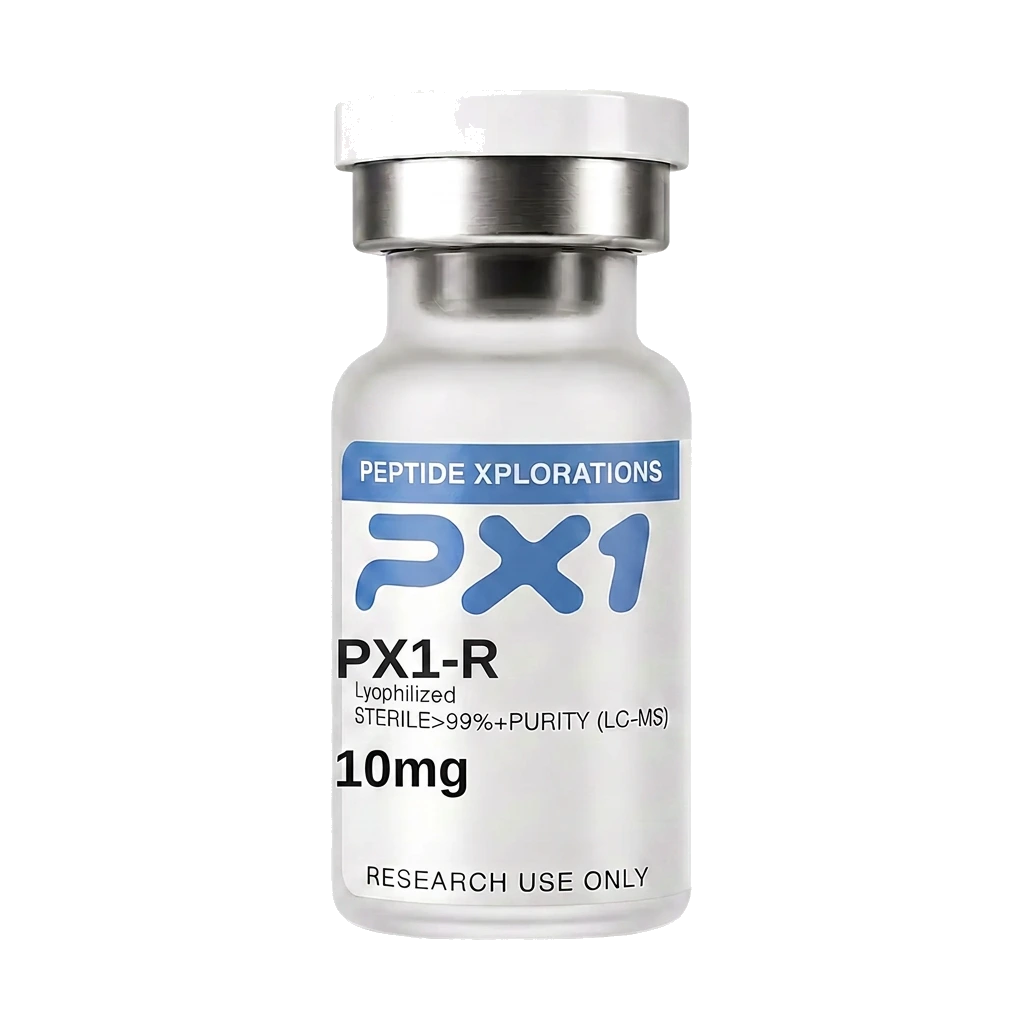
Reviewed By
PX1 QC — Analytical Chemistry Team
Every article is reviewed by PX1's in-house analytical team for accuracy on mechanism, dosing ranges reported in the literature, and lab-handling guidance. We do not publish clinical or medical advice.
Quick answer
Step-by-step laboratory protocol for reconstituting research peptides with sterile Bacteriostatic Water. Includes mixing calculations, diluent selection, and storage rules.
Key takeaways
- Lyophilized peptide vial, equilibrated to room temperature
- Sterile Bacteriostatic Water (0.9% benzyl alcohol)
- Sterile reconstitution syringe
- 70% isopropyl alcohol wipes
Required reconstitution equipment
- Lyophilized peptide vial, equilibrated to room temperature
- Sterile Bacteriostatic Water (0.9% benzyl alcohol)
- Sterile reconstitution syringe
- 70% isopropyl alcohol wipes
Step-by-step reconstitution procedure
- Equilibration & sanitation — allow the vial to reach room temperature and wipe both rubber stoppers with alcohol.
- Draw diluent — draw the exact volume of bacteriostatic water required using a sterile syringe.
- Slow wall injection — insert the needle and direct the stream down the inside glass wall of the vial. Do not spray directly onto the powder.
- Gentle circular dissolution — allow the liquid to absorb, then swirl in a slow circular motion until fully dissolved. Do not shake or vortex.
Reconstitution math & concentration examples
Formula: Total peptide mass (mg) ÷ volume of diluent added (mL) = concentration (mg/mL)
- 5 mg vial + 2.0 mL BAC water = 2.5 mg per mL (250 mcg per 0.1 mL unit)
- 10 mg vial + 2.0 mL BAC water = 5.0 mg per mL (500 mcg per 0.1 mL unit)
Storage & shelf-life parameters
Reconstituted solutions preserved with bacteriostatic water must be stored refrigerated at 2°C – 8°C and are typically stable up to 30 days. Avoid repeated freeze-thaw cycles, which degrade peptide integrity.
This protocol describes laboratory handling of research reference materials only. PX1 Research compounds are not for human or animal use.