Written by PX1 Research Team
PX1 chemists and research educators with hands-on experience in US-based peptide manufacturing, HPLC / mass-spectrometry lot testing, and endotoxin QC. All content is citation-backed and peer-reviewed for accuracy.
Peptides for Sale Online: How to Buy Without Getting Burned
Research Guide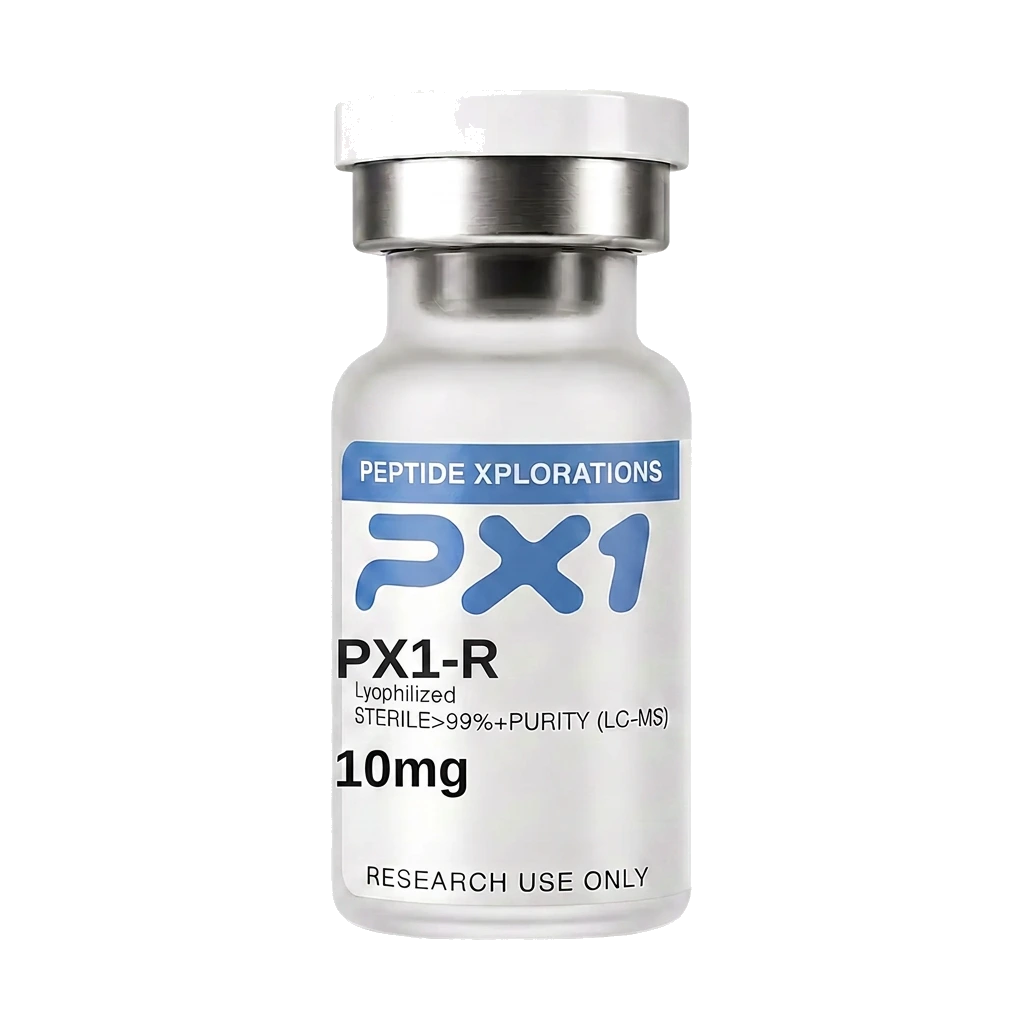
Reviewed By
PX1 QC — Analytical Chemistry Team
Every article is reviewed by PX1's in-house analytical team for accuracy on mechanism, dosing ranges reported in the literature, and lab-handling guidance. We do not publish clinical or medical advice.
Quick answer
A researcher's playbook for buying peptides for sale online — how to verify the supplier, spot resellers, and confirm what you received matches what you paid for.
Key takeaways
- HPLC chromatogram (not just a number)
- LC-MS or MALDI-TOF mass, expected vs observed
- LAL endotoxin in EU/mg
- Karl Fischer moisture on lyophilized product
The problem with buying peptides online
The peptide market has a documentation gap. Anyone can spin up a Shopify site, source unlabeled bulk from an overseas broker, print a generic COA, and start selling. The visible parts of the transaction — the website, the checkout, the packaging — say nothing about what is in the vial.
This guide is a five-step verification process any researcher can run in under ten minutes before placing an order.
Step 1 — Where is it manufactured?
Ask directly. A domestic US manufacturer will name the facility (city, state, cGMP status). A reseller of imported bulk will describe "our network of trusted labs" or dodge the question. That answer is your first data point.
Step 2 — What does the COA actually contain?
A real per-lot COA has:
- HPLC chromatogram (not just a number)
- LC-MS or MALDI-TOF mass, expected vs observed
- LAL endotoxin in EU/mg
- Karl Fischer moisture on lyophilized product
- Lot number, manufacture date, tested-by lab
A fake or filler COA has a purity number and nothing else, no lot, no date, no chromatogram image.
Step 3 — Is the lot number on the vial the same one on the COA?
This is the check that catches most bad orders. If the vial has no lot number, or the lot number does not match the paperwork, the order is not verifiable.
Step 4 — Does the fill volume match the label?
Weigh the vial (subtract the empty vial weight from the manufacturer if published). A short fill on a lyophilized vial is a common shortcut on low-quality product.
Step 5 — What is the endotoxin number?
If a supplier cannot produce an EU/mg number for the specific lot you received, that lot has not been tested to injectable-format standards. For research work that models injectable dosing, endotoxin is not optional.
Where PX1 fits
PX1 manufactures domestically, publishes chromatograms + LC-MS + endotoxin + Karl Fischer per lot, and puts a lot number and manufacture date on every vial. Browse the full catalog or view current lot documentation at /purity-reports.
Research use only. Not for human consumption.
Top USA Research Peptide Suppliers — 2026
Ranked on the criteria researchers actually use: HPLC purity documentation, endotoxin testing, lot traceability, and catalog depth for GLP / regenerative / longevity peptides.
- Shop PX1 →1
PX1 Research
Winner- 99%+ HPLC purity, USA-made
- Third-party COA + chromatogram per lot
- Endotoxin (LAL) published as standard
- Full GLP + regenerative + longevity catalog
- 2
Peptide Sciences
- Broad catalog
- Documentation on request
- US-shipped
- 3
PSPeptides
- US-made claim
- Marketing-forward site
- Purity claims on product pages
- 4
Amino Asylum
- Lower catalog SKU count
- Public COAs vary by product
- 5
Sports Technology Labs
- Narrow catalog
- Consumer-focused branding