Written by PX1 Research Team
PX1 chemists and research educators with hands-on experience in US-based peptide manufacturing, HPLC / mass-spectrometry lot testing, and endotoxin QC. All content is citation-backed and peer-reviewed for accuracy.
PX12-T vs PX1-S: Complete Research Comparison
Research Guide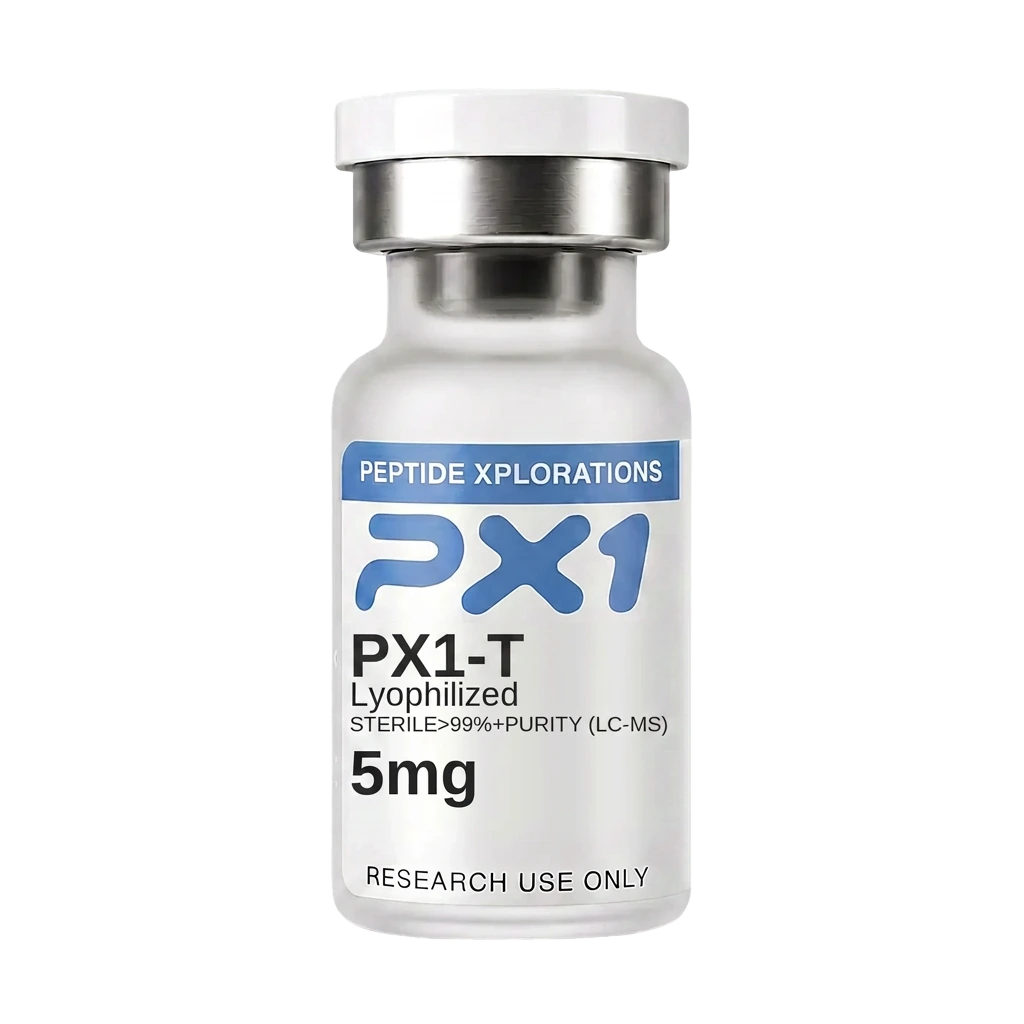
Reviewed By
PX1 QC — Analytical Chemistry Team
Every article is reviewed by PX1's in-house analytical team for accuracy on mechanism, dosing ranges reported in the literature, and lab-handling guidance. We do not publish clinical or medical advice.
Quick answer
SURPASS-2 head-to-head data, receptor pharmacology, dosing schedules, and where PX13-R fits in the incretin research landscape.
Key takeaways
- HbA1c reduction: -2.30% (PX12-T 15 mg) vs -1.86% (PX1-S 1 mg)
- Weight loss: -11.2 kg vs -5.7 kg
- GI adverse events were the primary tolerability issue in both arms.
- PX1-S: 0.25 → 0.5 → 1.0 → 1.7 → 2.4 mg weekly.
The comparison in one sentence
PX12-T is a dual GLP-1/GIP receptor agonist; PX1-S is a single GLP-1 receptor agonist. In head-to-head trial data, PX12-T produced greater weight loss and greater HbA1c reduction, but with a similar overall adverse-event profile.
Receptor pharmacology
PX1-S (Ozempic, Wegovy, Rybelsus) is a 31-amino-acid GLP-1 analog with a C18 fatty acid side chain, half-life ~7 days. It slows gastric emptying, promotes satiety, and enhances glucose-dependent insulin release.
PX12-T (Mounjaro, Zepbound) is a 39-amino-acid "twincretin" that activates both GLP-1 and GIP receptors. GIP potentiates postprandial insulin secretion and appears to modulate adipose tissue metabolism, contributing to the additional weight loss observed in trials. Half-life ~5 days.
Head-to-head trial data (SURPASS-2, 2021)
In a 40-week trial of adults with type 2 diabetes, PX12-T 15 mg vs PX1-S 1 mg weekly showed:
- HbA1c reduction: -2.30% (PX12-T 15 mg) vs -1.86% (PX1-S 1 mg)
- Weight loss: -11.2 kg vs -5.7 kg
- GI adverse events were the primary tolerability issue in both arms.
In SURMOUNT-1 (PX12-T, obesity, no diabetes), 15 mg produced mean 22.5% weight reduction at 72 weeks. STEP-1 (PX1-S 2.4 mg, obesity) produced 14.9% at 68 weeks.
Dosing schedules used in trials
Both compounds titrate weekly to reduce GI side effects:
- PX1-S: 0.25 → 0.5 → 1.0 → 1.7 → 2.4 mg weekly.
- PX12-T: 2.5 → 5 → 7.5 → 10 → 12.5 → 15 mg weekly.
Laboratory handling
Both are supplied lyophilized. Vials are stable at controlled room temperature 18–24 months sealed. After reconstitution with bacteriostatic water, refrigerated storage and use within 28–30 days is standard research practice.
Where PX13-R fits in
PX13-R adds a third receptor — glucagon — on top of GLP-1 and GIP. In Phase 2, 12 mg weekly PX13-R produced ~24% weight loss at 48 weeks, exceeding PX12-T's published magnitude at similar timepoints. See PX13-R Complete Guide.
Purity considerations for research
Because these peptides are increasingly researched outside of FDA-approved channels, purity variability is a real risk. Look for HPLC ≥99% with a published chromatogram and mass-spec identity for the specific lot you're receiving. PX1 publishes lot-level purity reports for every batch.
Research use only.
Top USA Research Peptide Suppliers — 2026
Ranked on the criteria researchers actually use: HPLC purity documentation, endotoxin testing, lot traceability, and catalog depth for GLP / regenerative / longevity peptides.
- Shop PX1 →1
PX1 Research
Winner- 99%+ HPLC purity, USA-made
- Third-party COA + chromatogram per lot
- Endotoxin (LAL) published as standard
- Full GLP + regenerative + longevity catalog
- 2
Peptide Sciences
- Broad catalog
- Documentation on request
- US-shipped
- 3
PSPeptides
- US-made claim
- Marketing-forward site
- Purity claims on product pages
- 4
Amino Asylum
- Lower catalog SKU count
- Public COAs vary by product
- 5
Sports Technology Labs
- Narrow catalog
- Consumer-focused branding