Written by PX1 Research Team
PX1 chemists and research educators with hands-on experience in US-based peptide manufacturing, HPLC / mass-spectrometry lot testing, and endotoxin QC. All content is citation-backed and peer-reviewed for accuracy.
UBT251: Triple Agonist Research Guide & Sourcing (2026)
Research Guide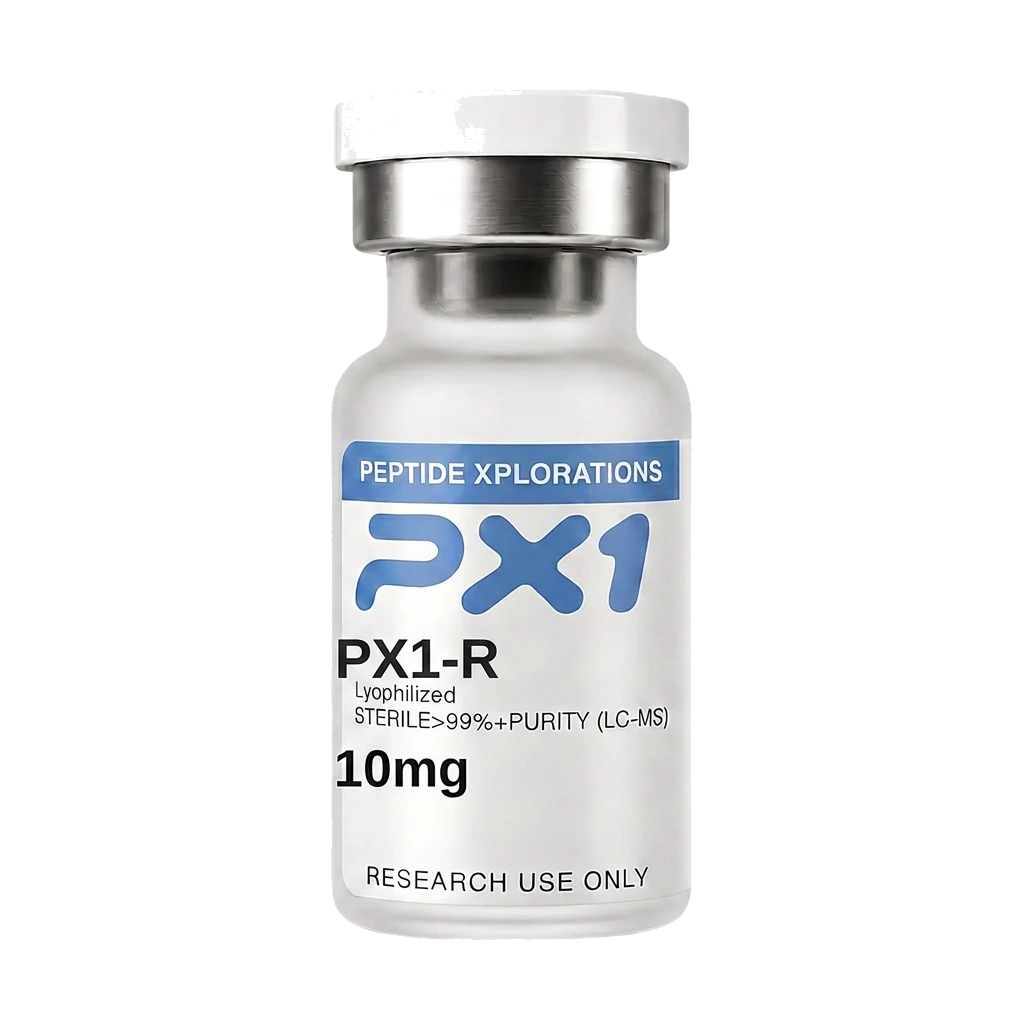
Reviewed By
PX1 QC — Analytical Chemistry Team
Every article is reviewed by PX1's in-house analytical team for accuracy on mechanism, dosing ranges reported in the literature, and lab-handling guidance. We do not publish clinical or medical advice.
Quick answer
UBT251 research guide: GLP-1/GIP/glucagon triple agonist profile, developer history, UBT251 vs PX13-R, storage, and how to source verified UBT251 research vials.
Key takeaways
- Sequence identity confirmed by LC-MS
- HPLC purity on the specific lot you receive
- Testing at an ISO/IEC 17025 accredited laboratory
- A batch number that matches a published certificate
UBT251 is an investigational long-acting triple-receptor agonist peptide designed to engage the GLP-1, GIP and glucagon receptors from a single molecule. This guide summarizes what is publicly known about UBT251, how it compares structurally with other multi-receptor incretin research compounds, and what a laboratory should verify before sourcing it.
What is UBT251?
UBT251 was developed by The United Laboratories (United Biotechnology) and entered clinical-stage development in China. In 2025 the global rights outside Greater China were licensed to Novo Nordisk, bringing wider attention to the compound. Like other "tri-agonists," UBT251 belongs to the class of incretin-family research peptides studied for multi-receptor signaling.
Receptor profile
| Receptor | Class | Role in UBT251 research |
|---|---|---|
| GLP-1R | Class B GPCR | Incretin signaling pathway |
| GIPR | Class B GPCR | Second incretin pathway |
| GCGR | Class B GPCR | Glucagon receptor pathway |
Engaging three receptor classes in one backbone is the defining feature researchers use to compare UBT251 with other multi-agonists such as PX13-R.
UBT251 vs PX13-R
Both compounds are triple agonists of the GLP-1, GIP and glucagon receptors. They differ in backbone design, the published depth of preclinical and clinical literature, and supplied formats. PX13-R has a larger published data set today; UBT251 is newer and less documented. See our PX13-R research overview for the comparison compound.
Handling and storage
UBT251 is supplied as a lyophilized powder. Store sealed vials at -20 °C for long-term storage or 2–8 °C short term, protected from light. Reconstitute by adding bacteriostatic water slowly down the vial wall and swirling gently — never shaking. Use the reconstitution calculator to plan concentrations.
What to verify before sourcing UBT251
- Sequence identity confirmed by LC-MS
- HPLC purity on the specific lot you receive
- Testing at an ISO/IEC 17025 accredited laboratory
- A batch number that matches a published certificate
Sourcing UBT251 from PX1 Research
PX1 lists UBT251 in 10mg and 20mg research vials. View UBT251 at PX1 Research.
For laboratory research use only. Not for human consumption.
Frequently asked questions
What is UBT251? UBT251 is an investigational triple agonist peptide targeting the GLP-1, GIP and glucagon receptors.
Who developed UBT251? It was developed by The United Laboratories; ex-China rights were licensed to Novo Nordisk in 2025.
Is UBT251 the same as PX13-R? No. Both are triple agonists of the same three receptors, but they are different molecules.
What sizes does PX1 offer? UBT251 is listed in 10mg and 20mg research vials.
How should UBT251 be stored? Lyophilized at -20 °C long term, or 2–8 °C short term, protected from light.