Written by PX1 Research Team
PX1 chemists and research educators with hands-on experience in US-based peptide manufacturing, HPLC / mass-spectrometry lot testing, and endotoxin QC. All content is citation-backed and peer-reviewed for accuracy.
US Made Peptides vs Imported Peptides: A Sourcing Comparison
Research Guide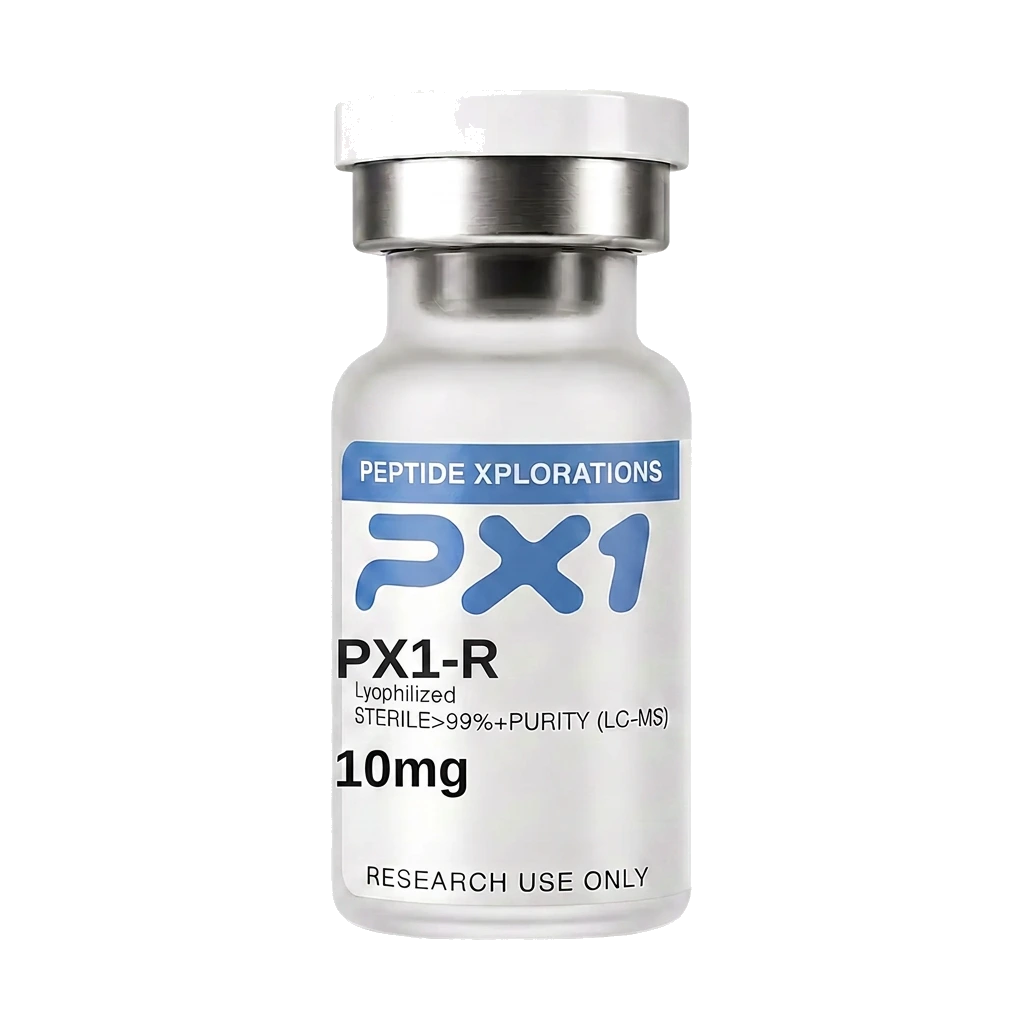
Reviewed By
PX1 QC — Analytical Chemistry Team
Every article is reviewed by PX1's in-house analytical team for accuracy on mechanism, dosing ranges reported in the literature, and lab-handling guidance. We do not publish clinical or medical advice.
Quick answer
A direct comparison of domestically synthesized research peptides against imported bulk — purity consistency, degradation in transit, COA traceability, dispatch time and true cost per mg.
Key takeaways
- Thermal cycling. Repeated warm-cool cycles in containers and bonded warehouses drive deamidation of asparagine and glutamine residues.
- Oxidation. Methionine, cysteine and tryptophan residues oxidize on exposure to residual oxygen and humidity, especially where stoppering was imperfect.
- Moisture ingress. Elevated water content collapses the lyophilized cake and accelerates every degradation pathway simultaneously.
- Time. A vial that spent five weeks in transit before repackaging has already consumed part of its useful shelf life.
US Made Peptides vs Imported Peptides
The core sourcing decision in research peptides is not brand versus brand. It is domestically synthesized material versus imported bulk that has been repackaged. Everything else — price, dispatch speed, documentation quality — follows from that single structural choice.
The two supply chains
Imported bulk model Overseas synthesis lab → bulk export → freight and customs → US importer or reseller → repackaging or contract fill → shipped to you.
Domestic manufacturer model Raw amino acids → in-house solid-phase synthesis → preparative HPLC purification → lyophilization and sterile fill → in-house QC → shipped to you.
The imported chain has four to six custody transfers. The domestic chain has none before the vial is sealed.
Where imported material degrades
Lyophilized peptide is stable, but it is not indestructible. In transit and brokerage it is exposed to:
- Thermal cycling. Repeated warm-cool cycles in containers and bonded warehouses drive deamidation of asparagine and glutamine residues.
- Oxidation. Methionine, cysteine and tryptophan residues oxidize on exposure to residual oxygen and humidity, especially where stoppering was imperfect.
- Moisture ingress. Elevated water content collapses the lyophilized cake and accelerates every degradation pathway simultaneously.
- Time. A vial that spent five weeks in transit before repackaging has already consumed part of its useful shelf life.
None of this is visible on the label. It is visible on a fresh HPLC trace — which is precisely why importers who do not re-test cannot tell you what you are receiving.
Documentation, compared
| Document | Typical imported bulk | Domestic manufacturer |
|---|---|---|
| COA source | Foreign supplier, undated or reused | Lot-specific, in-house, dated |
| Chromatogram | Frequently withheld | Published per lot |
| MS identity | Rare | Standard |
| Endotoxin (LAL) | Rare | Standard |
| Moisture / residual solvent | Almost never | Standard |
| Lot number match to vial | Often mismatched | Exact |
A supplier who cannot produce a chromatogram for the lot you will receive is not withholding it out of caution. They usually do not have it.
Cost, honestly
Imported bulk is genuinely cheaper at the raw-material level. But the delivered cost of verified material converges quickly once you account for:
- Re-testing costs the importer either absorbs or skips
- Losses from lots that fail on arrival
- Reseller margin stacked at each handoff
- Time cost of delayed or held shipments
Buying direct from a domestic manufacturer removes the reseller stack entirely. Compare on cost per milligram at a fixed ≥99.0% purity floor, not on vial price. See the pricing mechanics in our quality and pricing guide.
Dispatch and continuity of supply
Imported supply arrives in waves. When a container is delayed or a lot fails inspection, the reseller goes out of stock for weeks and researchers switch lots mid-project — introducing a variable nobody wanted. Domestic manufacture means production is scheduled against demand and dispatch is same-day, so a multi-month protocol can stay on one supply line.
When imported material is fine
It can be, under two conditions: the importer re-tests every lot on arrival with HPLC and MS and publishes those results, and the chain of custody is documented from the foreign lab forward. Very few do both. If a supplier does, judge them on the analytics rather than the map.
How PX1 is structured
We are the primary manufacturer, not a distributor. Synthesis, purification, lyophilization, fill and analytical QC happen in our own US cGMP-compliant facility, and each lot ships with matched documentation — see purity reports, endotoxin testing and our manufacturing process.
Summary
Imported bulk optimizes for unit cost; domestic synthesis optimizes for traceability and consistency. If your work depends on knowing what is in the vial and on lot-to-lot reproducibility, buy from the facility that made it and read the chromatogram before you order.
Research use only. Not for human or veterinary use. Not intended to diagnose, treat, cure, or prevent any disease.
Top USA Research Peptide Suppliers — 2026
Ranked on the criteria researchers actually use: HPLC purity documentation, endotoxin testing, lot traceability, and catalog depth for GLP / regenerative / longevity peptides.
- Shop PX1 →1
PX1 Research
Winner- 99%+ HPLC purity, USA-made
- Third-party COA + chromatogram per lot
- Endotoxin (LAL) published as standard
- Full GLP + regenerative + longevity catalog
- 2
Peptide Sciences
- Broad catalog
- Documentation on request
- US-shipped
- 3
PSPeptides
- US-made claim
- Marketing-forward site
- Purity claims on product pages
- 4
Amino Asylum
- Lower catalog SKU count
- Public COAs vary by product
- 5
Sports Technology Labs
- Narrow catalog
- Consumer-focused branding