How to Buy Research Peptides Safely
A practical checklist for sourcing high-purity, verifiable material
Disclaimer: All articles and product details provided on this website are intended for educational and informational purposes only. The products listed here are for in-vitro research only. In-vitro studies are conducted outside of living organisms. These products are not intended as medicines or drugs and have not been approved by the FDA to prevent, treat, or cure any medical condition, ailment, or disease. The direct or indirect administration of these substances to humans or animals is unequivocally prohibited under applicable law.
The Sourcing Problem
The research-peptide market is uneven. Material that looks identical in a vial can differ enormously in purity, identity, and consistency. Because these compounds are for laboratory research only, the burden of verification falls on the buyer. The good news: a handful of checks separates credible suppliers from the rest.
A Practical Checklist
- Batch-specific COAs. Insist on a Certificate of Analysis tied to the exact lot number on your vial — not a generic document. It should include both HPLC purity and mass spectrometry identity.
- Transparent testing. Look for ≥99% purity claims backed by published chromatograms, and ideally testing performed or verified by accredited methods.
- Domestic manufacturing. U.S.-based manufacturing under cGMP-inspired practices shortens the supply chain and adds oversight.
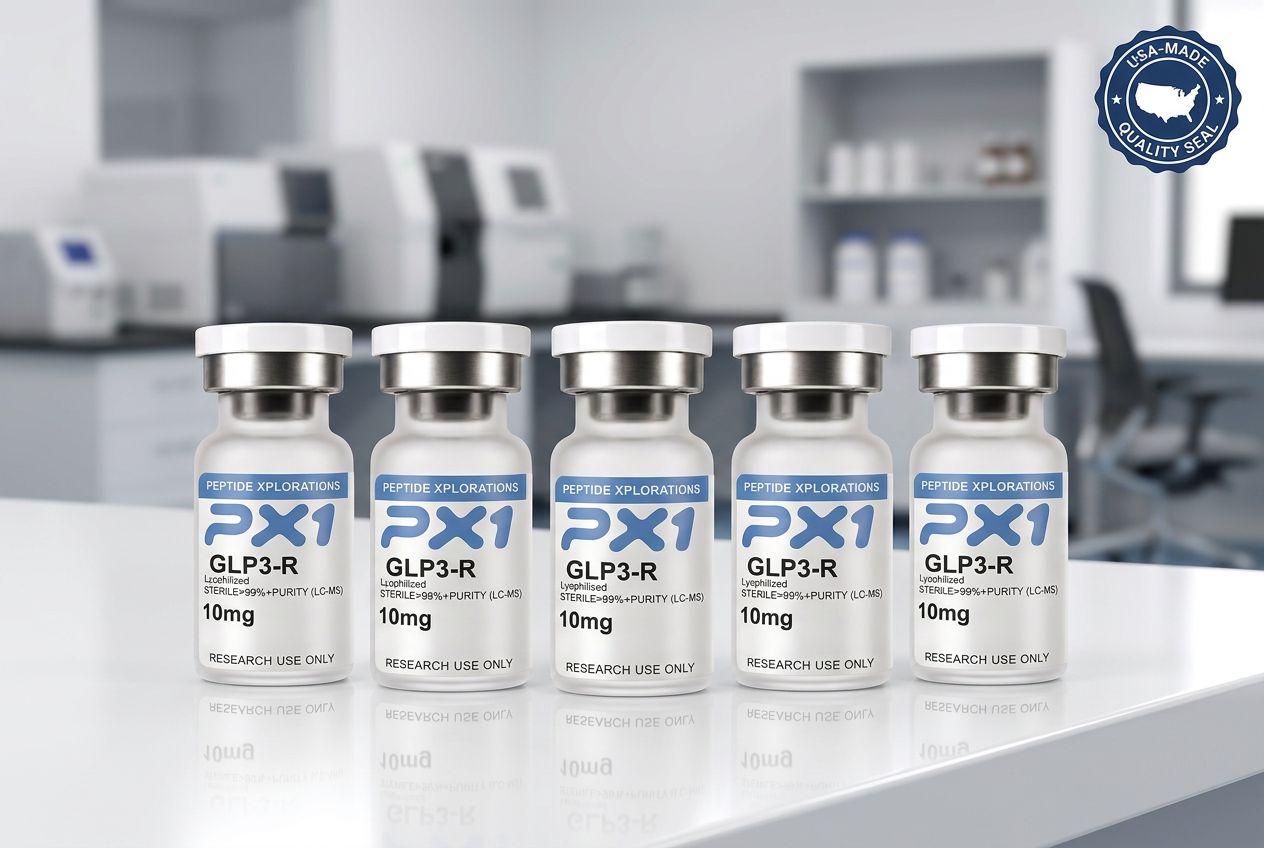
- Honest labeling. The vial should clearly state the compound, quantity, and that it is for research use only. Be wary of dosing or health claims.
- Proper packaging. High-quality glass vials, lyophilized contents, and a nitrogen seal indicate attention to stability.
- Clear policies. A legitimate supplier publishes shipping, storage, and compliance information and restricts sales to qualified research use.
Red Flags to Avoid
- No COA, or a COA that cannot be matched to your lot
- Health, dosing, or "human use" language
- Prices that are implausibly low for the stated purity
- Vague or absent information about where and how the material is made
The Takeaway
Buying safely is mostly about documentation and transparency. When a supplier can prove identity and purity for the specific batch in your hand, your research starts from solid ground. PX1 Research provides lot-linked COAs and USA-made, HPLC- and MS-verified material for exactly this reason.