Peptide Stability & Cold Storage: Maximizing Research Integrity
Practical handling that keeps lyophilized and reconstituted peptides intact
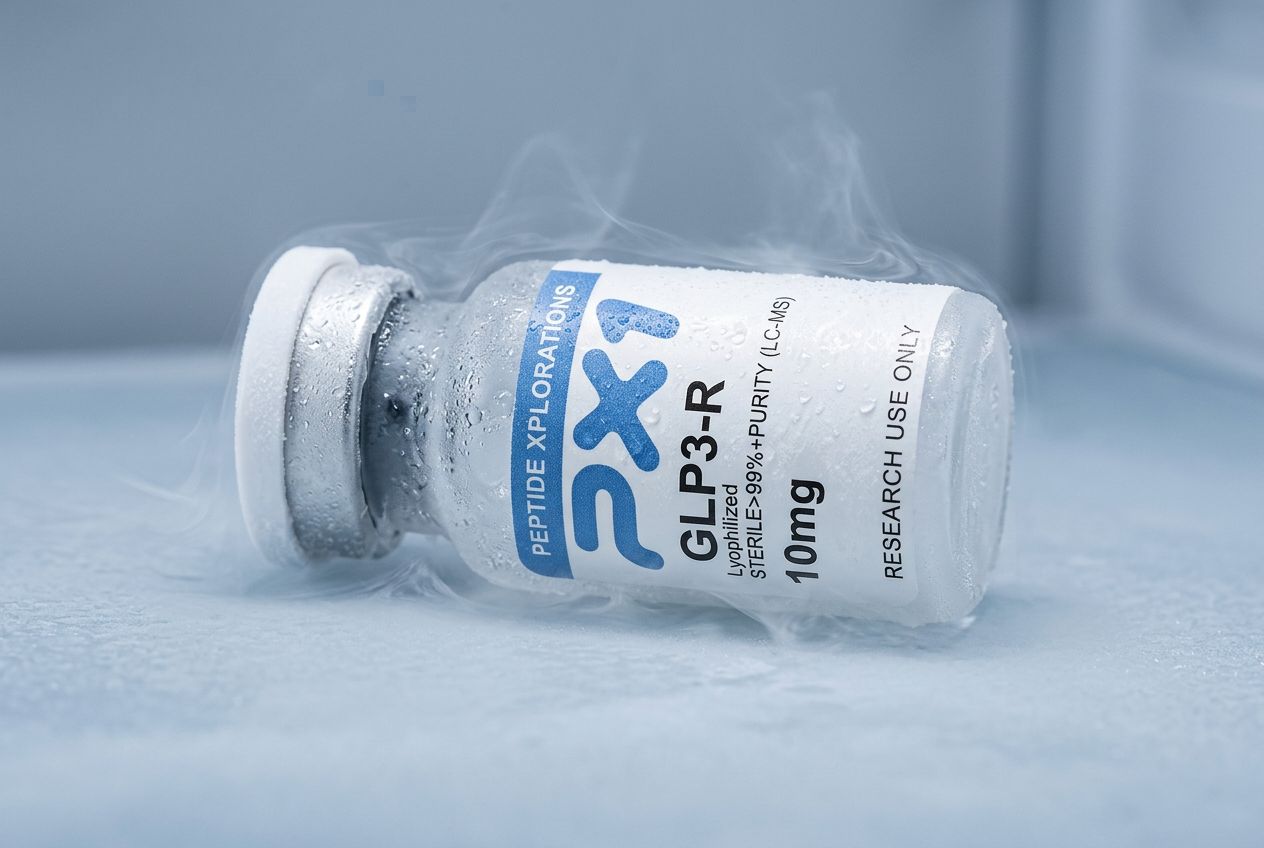
Disclaimer: All articles and product details provided on this website are intended for educational and informational purposes only. The products listed here are for in-vitro research only. In-vitro studies are conducted outside of living organisms. These products are not intended as medicines or drugs and have not been approved by the FDA to prevent, treat, or cure any medical condition, ailment, or disease. The direct or indirect administration of these substances to humans or animals is unequivocally prohibited under applicable law.
Stability Is a Handling Problem
Most peptide degradation is not caused by the molecule itself but by how it is handled and stored. Temperature, moisture, oxygen, and light all chip away at integrity over time. Good cold-chain discipline is one of the cheapest ways to protect expensive material and reproducible data.
Lyophilized vs. Reconstituted
- Lyophilized (powder) peptides are the most stable form. Kept cold and dry, many are stable for extended periods.
- Reconstituted (in solution) peptides are markedly less stable and vulnerable to chemical and microbial degradation, especially sequences containing cysteine, methionine, tryptophan, asparagine, or glutamine.
Temperature Guidelines
- Short term (days–weeks): 4°C (refrigerated), protected from light.
- Long term (months–years): −20°C, or −80°C for maximum preservation.
- Avoid frost-free freezers — their automatic defrost cycles create temperature swings that accelerate degradation.
The Freeze-Thaw Rule
Every freeze-thaw cycle damages peptide. The single most effective practice is to aliquot into single-use portions immediately after reconstitution, so each experiment thaws only what it needs and the rest stays frozen and untouched.
Controlling Moisture and Oxygen
- Equilibrate frozen vials to room temperature before opening to prevent condensation on the contents.
- Keep vials sealed; reseal residual material under an inert gas (nitrogen or argon) when possible.
- Store cold, dry, and dark — light and humidity are silent enemies of stability.
Quick Reference
- Cold, dry, dark storage
- Minimize freeze-thaw cycles
- Limit oxygen and moisture exposure
- Avoid long-term storage in solution
- Aliquot to match experimental needs