Step-by-Step Peptide Reconstitution for Researchers
A careful, repeatable protocol for preparing lyophilized research peptides
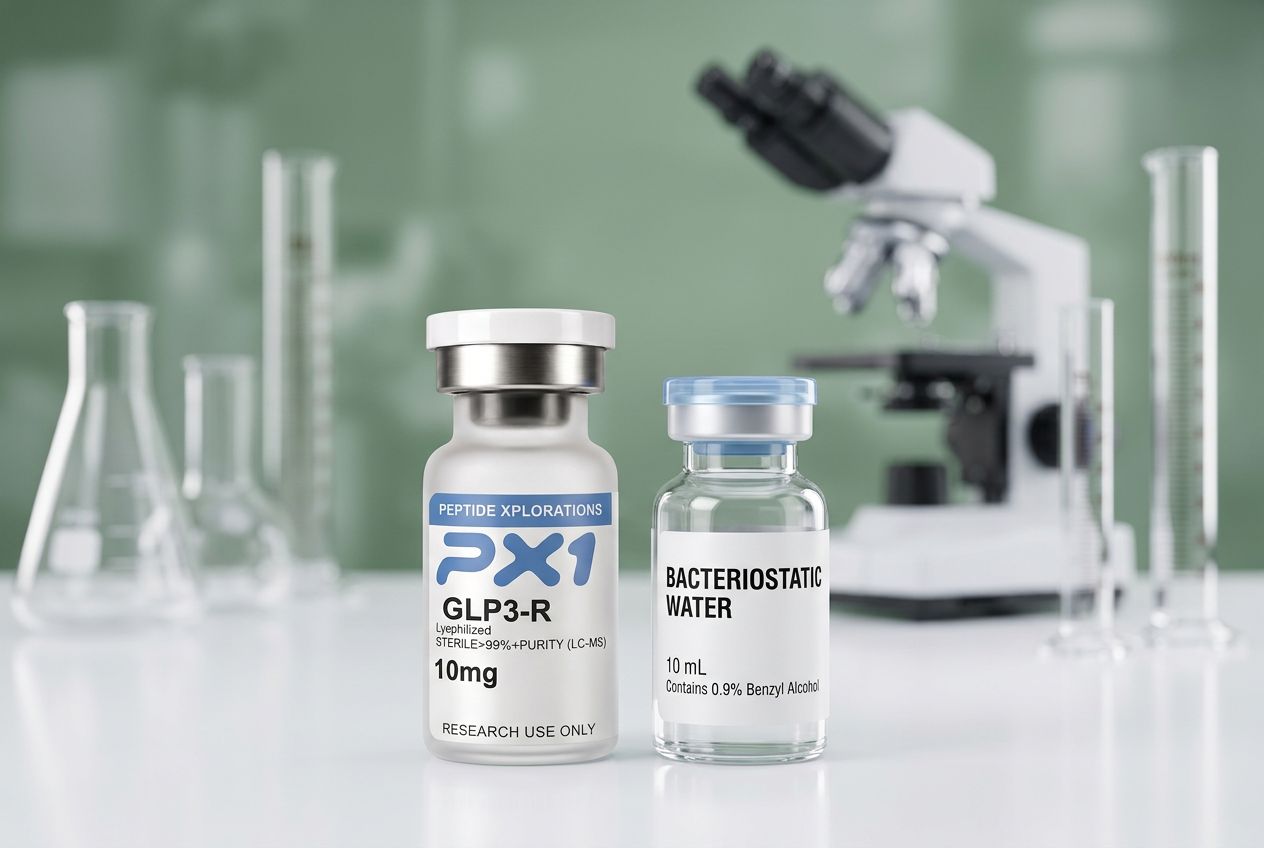
Disclaimer: All articles and product details provided on this website are intended for educational and informational purposes only. The products listed here are for in-vitro research only. In-vitro studies are conducted outside of living organisms. These products are not intended as medicines or drugs and have not been approved by the FDA to prevent, treat, or cure any medical condition, ailment, or disease. The direct or indirect administration of these substances to humans or animals is unequivocally prohibited under applicable law.
Why Reconstitution Technique Matters
Reconstitution is the process of dissolving a lyophilized (freeze-dried) research peptide into a suitable solvent so it can be accurately measured and studied in vitro. Done carelessly, it introduces the two most common sources of error in peptide work: inaccurate concentration and avoidable degradation. A disciplined, repeatable protocol protects the integrity of your data and the value of the material.
Materials to Prepare
- The lyophilized peptide vial (e.g., a PX1 Research frosted vial), equilibrated to room temperature
- A reconstitution solvent — most commonly bacteriostatic water for multi-use work, or sterile water for single-use preparations
- A sterile syringe with a fine-gauge needle
- Alcohol prep pads
- Calibrated pipettes and labeled storage aliquot tubes
The Protocol
- Equilibrate. Allow the frozen or refrigerated vial to reach room temperature before opening to prevent condensation on the powder.
- Sanitize. Wipe the rubber stopper of both the peptide vial and the solvent vial with an alcohol pad.
- Calculate volume. Decide the target concentration first, then the solvent volume. For example, 10 mg of peptide reconstituted with 2 mL of solvent yields 5 mg/mL.
- Draw the solvent. Withdraw the calculated volume of bacteriostatic water into the syringe.
- Add slowly. Insert the needle at an angle and let the solvent run down the inner glass wall of the vial — never inject directly onto the peptide powder, which can cause foaming and shear stress.
- Dissolve gently. Swirl or roll the vial slowly. Do not shake. Allow a few minutes for full dissolution; gentle warming (≤40°C) may help stubborn sequences.
- Inspect. The solution should be clear and free of visible particulates. Cloudiness can indicate incomplete solubility — see our solubility guide.
After Reconstitution
Reconstituted peptide is far less stable than the lyophilized form. Aliquot into single-use portions to avoid repeated freeze-thaw cycles, label each with concentration and date, and store cold and dark. Refrigerated solutions are generally usable for up to ~30 days; for longer windows, freeze the aliquots.